














“Donald Trump’s Net Worth: Latest Estimates and Figures”
 Jillian Hunt
January 11, 2026 5:55 am
.
27 min read
Jillian Hunt
January 11, 2026 5:55 am
.
27 min read

Could a single headline truly capture someone’s financial reality? This guide asks that question up front and explains why the answer is usually no.
Key takeaway: every publicly cited figure is conditional — many holdings are private, valuations swing, and liabilities can change fast.
This article defines net worth trump as an estimate built from reported assets, liabilities, and valuation assumptions — not a single verified number. It previews three headline estimates: Forbes (~$5.1B), Bloomberg (~$7.08B), and an Axios spike tied to a crypto launch that briefly suggested ~$58B.
The story is as much about methodology as it is about the final dollars figure. The piece will track major eras — pre‑politics, first term, between terms, and the crypto era — to show trends rather than chase one perfect number.
Readers will get a clear method: the guide uses disclosures, court findings, and major transactions to frame a responsible estimate. It will clarify what each estimate likely includes and excludes, so changes over time make sense.
Takeaway 1: Public estimates vary because of different methods and opaque assets.
Takeaway 2: Use reported data to interpret ranges, not definitive dollar totals.
Where Donald Trump’s net worth stands now
Major trackers today offer different snapshots of his financial profile, depending on timing and method.
Forbes’ early June 2025 estimate and what it represents
Forbes put the figure at about $5.1 billion in early June 2025. That estimate models a balance sheet made up of real estate, licensing and other business lines, then subtracts known liabilities.
Bloomberg’s January 2025 estimate and why it differs
Bloomberg reported roughly $7.08 billion in January 2025. Differences often come down to pricing assumptions, which assets are emphasized, and how debt and liquidity are treated.
Why “not publicly known” is the key context for every figure
Not publicly known means many core holdings are private and only appear in slices: disclosures, court filings, or press reports.
- Major outlets give a date-stamped snapshot, not an immutable scoreboard.
- Readers should treat current reporting as a range, not a precise tally of dollars.
- Year-to-year moves can reflect market sentiment as much as business changes.
Why net worth estimates vary so widely for high-profile billionaires
Estimates diverge because analysts must piece together incomplete financial puzzles for high-profile figures.
Private-company opacity forces most valuers to build an asset-by-asset model. Audited market prices are often missing, so they use comparable company multiples, conservative discounts, and illiquidity haircuts.
Private-company assumptions
When a company is private, analysts pick benchmarks and apply conservative multiples. They also discount future cash flow for liquidity and governance risk.
That approach reduces headline volatility but raises subjectivity. Two credible teams can still land millions or billions apart.
Real estate swings versus liquid assets
Real estate values move with cap rates, local demand, and financing conditions. A few comparable sales can shift a valuation quickly.
Liquid assets trade on exchanges, so pricing is cleaner. But market moves can still change perceived money overnight.
Brand value and licensing
Licensing income exists, but projecting future deals and choosing a multiple is subjective. Brand value is real cash flow, yet it resists precise pricing.
- Private holdings require judgment calls.
- Real estate adds volatility.
- Brand projections introduce model risk.

Bottom line: different, reasonable assumptions explain why one outlet can credibly report a different net worth than another without either being obviously wrong.
Net worth trump: the trendline across major eras
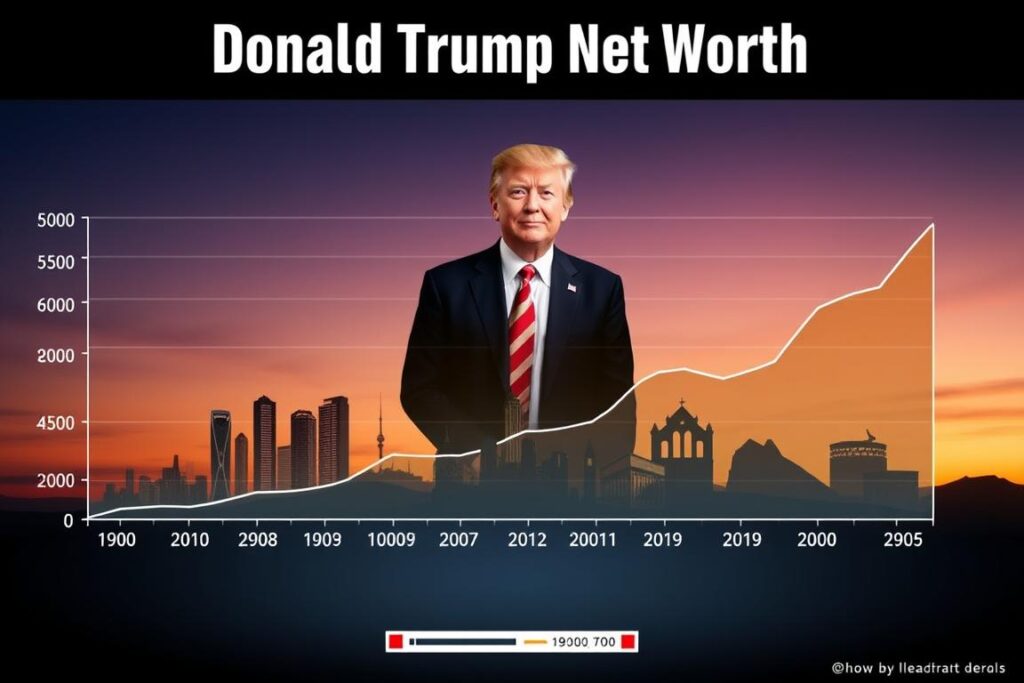
A simple era-based framework clarifies why headline figures move. View changes as four phases: a pre-White House baseline, the presidential period, the between-terms restructuring, and the rapid post-2024 acceleration tied to crypto narratives.
Pre-White House baseline and core business mix
Before he held office, most value came from real estate and licensing. Those assets behave differently than public stocks because they are illiquid and depend on local markets.
That mix raises valuation subjectivity. Comparable sales, cap rates, and licensing deals shape reported totals more than daily market moves.
Also Read:
What changed during the first term
During his presidency, attention and scrutiny grew. Media focus and ethics inquiries affected partner relationships and lending terms.
Forbes tracked a shift: about $3.7 billion before office versus roughly $2.5 billion when he left, reflecting operational hits and market reappraisals.
Between terms and the post-2024 acceleration
The between-terms period centered on lender relationships, accountant changes, and a few large transactions that altered liquidity quickly.
In the past year, crypto-linked narratives drove rapid valuation swings. Those stories can inflate headline estimates far faster than traditional real-estate appraisals.
- Timeline: baseline → presidency effects → restructuring → crypto acceleration.
- Why office matters: visibility can boost brand deals but also complicate financing.
- Watch: lender moves, major sales, and new asset classes that change apparent totals.
Early wealth formation through Fred Trump’s gifts, loans, and trusts
Early financial footing often sets the trajectory for decades of deals in capital-heavy fields like real estate.
New York reporting has been central to reconstructing how family money flowed across generations.
The New York Times finding of extensive revenue streams
The New York Times identified roughly 295 distinct revenue streams that Fred used to channel funds to his son over many years.
Those mechanisms included companies, contracts, and transfers that kept capital moving inside the trump family ecosystem.

Trust funds beginning in childhood and early millionaire claims
Trusts were set up as early as 1949, creating an ongoing source of support while he was a child.
The NYT report saying he was a millionaire by age 8 became a shorthand for origin wealth when tracking later business growth.
Documented borrowing from the Trump family estate
Public records and depositions show documented loans and gifts that supplied liquidity at crucial moments.
- He acknowledged borrowing $1 million as a young adult during a 2015 campaign statement.
- In a 2007 deposition he cited $9.6 million drawn from his father’s estate.
Why this matters today: early gifts, trusts, and loans establish initial equity, let a developer borrow against assets, and explain how early deals were sized.
Those transfers still matter because they build the base of assets that can absorb downturns and support future dealmaking in New York and beyond.
Inheritance milestones and family estate mechanics
Family transfers and intra-family loans often reshape available cash long before public filings reflect a change.
How liquidity differs from paper totals: cash from an estate or a sibling loan can be used immediately to service debt, fund acquisitions, or shore up operations. That practical liquidity matters far more to lenders and managers than a balance-sheet line item.
Also Read:
Sibling loans as a liquidity signal
In 1993 he took two loans from siblings totaling 30 million dollars. Those advances often signal either a short-term cash need or opportunistic financing inside a family group.
Estate distribution mechanics
When Fred died in 1999, his will reportedly left about 20 million dollars (after taxes) divided among surviving children that 1999. Public filings and depositions also cited anticipated shares near $35M each.
- Liquidity injections reduce the need for costly external borrowing.
- They can lower near-term interest costs and enable refinancing.
- Timing matters: one-year events can echo through future credit cycles.
Bottom line: documented loans and estate payouts are verifiable cash events that shape leverage, deal capacity, and long-term survival of assets within the trump family.
Real estate as the historical anchor of Trump’s wealth
Real estate has long formed the backbone of his public profile and remains the primary category analysts examine when estimating long-term value.
The portfolio centers on hotels, casinos, and golf courses, all of which are valued by income models or by comparable sales. Operating performance matters: occupancy, event revenue, and annual rounds played can swing valuation quickly.

How the Trump Organization’s role can vary
The Trump Organization may own a property outright, manage it, or license a name. Licensing produces fees and brand revenue, not equity.
In New York, signage appears on many buildings but does not automatically signal ownership. In 2015 his name showed up on multiple Manhattan sites, Wollman Rink, and a Bronx golf course while legal and financial arrangements differed by site.
- Real estate is the recurring anchor in most estimates.
- Hotels, casinos, and golf courses require both cash-flow and market comps for valuation.
- Branding can add revenue without adding property equity.
Why this matters: confusing licensing for ownership can inflate public assumptions, while ignoring brand fees can undercount recurring revenue. Later sections will link these valuation swings to lawsuits, financing limits, and lender confidence in New York.
The Apprentice and licensing income that reshaped cash flow
Television exposure created a recurring revenue stream that did not depend on new developments.
The show generated large, direct payouts and opened licensing paths that paid for years afterward.

Reported earnings from the show and related deals
From 2004 through 2018 he received a reported $427.4 million from The Apprentice and related endorsements.
That multi-year media income improved personal liquidity and changed borrowing power.
How TV-driven fame boosted branded business lines
Why it mattered: a hit program created new fee income without buying property. Licensing deals followed.
- Higher fees for name licensing increased annual cash flow.
- Product tie-ins and endorsements expanded categories and sales.
- Year-to-year TV revenue varied, so taxes and refinancing needs also shifted.
Looking ahead: this era set up many branded product deals and showed that headline revenue can differ from long-term profitability.
Taxes, refunds, and what filings suggest about profitability
Tax filings often give the clearest public signal about profitability, even when they don’t tell the whole story. They show taxable income, carryforwards, and refunds — practical clues about cash flow and loss timing.

Reported federal tax payments and zero-tax years
Public filings show he paid a combined 70.1 million dollars in federal tax during 2005–2007.
In 2008 he reported no federal tax due. That single year can reflect large deductions, losses, or timing differences in when income is recognized.
The refund narrative: $70.1M plus interest and audit risk
After reporting more than 700 million dollars in business losses on 2009 filings, he sought a refund and received 70.1 million dollars.
The IRS later added more than 2.7 million dollars in interest. As of 2020 audit consideration continued and potential repayment exposure could exceed 100 million dollars.
State and local refunds and layered liability
The New York Times reported about 21.2 million dollars in state and local refunds tied to those federal filings.
- State refunds can “piggyback” on federal changes and multiply repayment risk.
- Refunds plus interest raise the prospective dollars owed well beyond a headline amount.
- Audit outcomes can trigger repayments, interest, and penalties at multiple government levels.
Practical takeaway: tax refunds and ongoing audits create balance-sheet risk. A large potential liability can cut into apparent net worth even if asset valuations later rise.
Legal and valuation shocks tied to New York fraud findings
Legal findings in New york created immediate balance-sheet pressure and longer-term financing headaches.

Overvaluation claims on marquee properties
The court found that appraisals for a high-rise apartment in Trump Tower were roughly triple the building’s realistic size and market value. It also concluded that Mar-a-Lago’s reported valuation was inflated by about twenty-two times.
Judgment, disgorgement, and accruing interest
In 2024 the ruling ordered roughly $355 million in disgorgement. Reporters estimated about $100 million in interest as cases and appeals moved on, so the total liability eclipsed $500 million by year-end.
Why interest matters: compounding interest can turn a single headline judgment into a much larger dollar exposure over months and years.
Financing ripple effects from bank limits
New york-chartered banks were barred from lending to certain related entities until 2027, per reporting. That restriction shifts bargaining power to other lenders and often raises borrowing costs.
When primary bank access narrows, a company may face higher rates, shorter terms, or tougher covenants — all of which pressure liquidity and paper asset values.
- Direct hit: judgments reduce cash and add an immediate liability.
- Indirect hit: lender caution raises financing costs and slows deals.
- Result: fast-growing dollar liabilities can force sales or discounts on illiquid assets.
Takeaway: legal judgments and interest change the picture quickly. When liabilities move, published estimates can diverge sharply within months, reflecting real shifts in asset liquidity and lender confidence in New york.
How the Trump Organization earned money while he was in the White House
Operating teams managed day-to-day deals while he served in the white house, so commercial receipts continued to flow to corporate entities tied to his name.

Reported outside revenue during the presidency
Public disclosures show his companies reported just over dollars 1.6 billion in outside revenue during the term. Revenue is not the same as profit, but it signals scale and cash movement.
Political fundraising dollars routed into properties
Political events under his control spent roughly dollars 8.5 million at branded venues, while other GOP fundraising accounted for about dollars 2 million. Event hosting, catering, and room blocks explain how donations end up at his businesses.
Secret Service lodging costs and taxpayer-funded stays
The Secret Service was billed up to $1,185 per night for rooms tied to presidential travel. Over four years lodging charges exceeded dollars 1.4 million, a recurring focus in coverage of taxpayer-paid stays.
- Core mechanism: delegated management does not stop commercial billing to the company.
- Why it matters: sustained income helps service debt, cover legal fees, and supply liquidity used in valuations.
For wider context on related financial timelines, see a detailed profile at this related analysis.
Foreign-government spending, gifts, and the ethics debate
Public records and oversight reports turned hotel bills into a focal point for debate about influence. That scrutiny focused on documented payments and on whether gifts were properly reported to the federal government.

Why watchdog groups matter
Citizens for Responsibility and Ethics in Washington (CREW) tracked patterns that are hard for the public to see. CREW’s filings and reports surface spending and gift flows that otherwise stay buried in receipts or vendor lists.
What reporting documented
Oversight filings show more than $700,000 in foreign-government spending at a major D.C. hotel in the first two years. House Oversight Democrats later tallied about $7.8M in reported foreign government payments to his businesses during the presidency.
Unreported gifts and return calls
Oversight reporting flagged more than 100 potential foreign gifts and prompted calls to return money to the U.S. Treasury. Advocates argued that unreported items can create perception problems even when criminal intent is unproven.
- Citizens responsibility ethics groups highlight patterns, not just single transactions.
- Responsibility ethics washington coverage made hotel stays a proxy for influence concerns.
- These issues can shift lender and partner confidence, affecting branded demand and pricing.
Bottom line: documented dollars and gifts drove the debate, while proving quid pro quo remained difficult. Still, ethics washington scrutiny changed how banks and partners viewed future deals.
Brand power versus balance-sheet reality during the first term
A strong public image can create fees and headlines, yet audited books and lender views tell a different story. Popularity fuels licensing offers, but banks and appraisers demand verifiable cash flow and stable demand.
Forbes’ reported decline from before taking office to when he left office
Measured example: Forbes estimated a decline from $3.7 billion before taking office to $2.5 billion when he left office. That gap shows how public roles can coincide with lower published figures.
Why personal brand claims are treated cautiously
In testimony he said, “maybe $10 billion or something” for presidential brand value. Later, trump said similar figures in public remarks.
Analysts discount self-reported brand premiums when independent cash flows are missing.
- Brand buzz can lift licensing and short-term sales.
- Controversy may boost attention but harm mainstream partnerships.
- When he left office, licensing and visitor patterns often reset, changing valuations.
For related financial timelines and context, see a detailed profile at this related analysis.
Between presidencies: loans, accountants, and changed banking relationships
The period between terms shifted how lenders and partners viewed his balance sheet and brand.
Accounting assurance matters: when a trusted firm declines to vouch for statements, banks and counterparties treat that as a red flag.
Mazars’ withdrawal and lender signals
In February 2022 Mazars said it no longer trusted the information it had been provided and stopped serving as accountant. That move raised borrowing costs and complicated audits for the company and related firms.
Loans secured by marquee properties
Axos Bank provided liquidity with two large loans: $100 million on Trump Tower (Feb 2022) and $125 million on Doral (May 2022). Those deals show how real estate collateral can unlock cash even amid scrutiny.
Reputation fallout and partner exits
After January 6 several companies cut ties. Deutsche Bank publicly said it would no longer do business. New York revoked contracts and Cushman & Wakefield stopped leasing work at landmark addresses.
- Why it matters: losing firms and platform access reduces deal flow and brand monetization in New York.
- Trend: this era pushed the organization toward alternative lenders and different partnership choices.
Asset sales, major deals, and cash events after leaving Washington
Concrete asset sales and paydowns after the presidency created visible balance‑sheet shifts. These moves show how illiquid holdings can turn into usable cash and reduce borrowing pressure.
Old Post Office sale and loan payoff
In May 2022 the Old Post Office lease sale produced a reported $100 million profit. That transaction funded a payoff of about $170 million to Deutsche Bank.
Why it matters: selling a marquee asset converted paper value into dollars and lowered leverage. Lower debt can immediately improve financing flexibility and public perceptions after a big deal.
Aircraft costs and ongoing expenses
Earlier reporting noted that his Boeing 757 needed repairs and had not flown since the term ended. Campaigns sometimes covered aircraft use, but ownership still incurs maintenance and storage costs.
Clarification: Air Force One refers to the presidential aircraft while private jets like “force one” are company or campaign assets. Campaign travel and upkeep can affect business cash flow and annual expenses.
- Asset sale = cash in hand, less debt.
- Paying banks reduces interest and covenant pressure.
- Aircraft upkeep is a recurring outlay that often gets overlooked in headlines.
These post‑White House events set the stage for larger monetization paths and new valuation narratives. For related coverage of business moves, see a profile at recent NBC reporting and a comparative analysis at a FameWorth profile.
Crypto enters the picture and changes the net worth conversation
Digital-asset launches introduced “paper” swings that are distinct from real-world cash events. Token prices, issuance rules, and who controls supply can push headline figures up or down without a single bank transfer.
Why token events can reshape published estimates
Tokens trade publicly and move on sentiment. That means a small tradable supply or a large reported holding can create huge, rapid moves in dollars on paper.
The early‑2025 $Trump launch and Axios’ temporary spike
When the early‑2025 token debuted, Axios briefly modeled a $58 billion figure. That estimate relied on optimistic pricing and assumed high liquidity for a limited token supply.
World Liberty Financial, USD1, and stablecoin mechanics
World Liberty Financial issued the USD1 stablecoin, where reserves and interest strategies become part of the revenue story. Stablecoin reserve yields, lending, and peg mechanics can be presented as recurring income by a company, even if actual cash access differs.
Major investments and disputed holdings
Reports said UAE MGX routed about $2 billion into Binance via USD1. Critics raised conflict questions, noting large flows can change perceived independence and future valuation narratives.
- Accountable.US later flagged roughly $11.6B in “uncounted crypto assets” as a possible gap.
- Third-party trackers disagree because ownership proof, token custody, and convertible liquidity vary by ledger and legal structure.
- That disagreement explains why conservative and aggressive estimates can diverge sharply in the past year.
Bottom line: crypto and stablecoins can widen the gap between cautious and headline figures, so readers should treat rapid spikes as model-dependent, not as immediate cash in hand.
Second-term money flows and conflicts-of-interest scrutiny
Second-term finance patterns often look different when a sitting president maintains active private business ties. That overlap draws new attention to donors, deals, and what firms expect from access.
High-profile crypto relationships and pardon controversy
Reporting traced a sequence involving Binance founder Changpeng Zhao, World Liberty Financial’s USD1 stablecoin, and a reported $2B UAE investment. Coverage linked those flows to later pardon discussion and expanded Binance partnerships with WLF.
Allegations and reported meetings stirred scrutiny; they are distinct from proven legal findings. Observers flagged potential conflicts where private token deals and White House influence might intersect.
Gifts, Air Force One talks, and the presidential library pipeline
Press reports described donor pathways aimed at major projects, including a planned presidential library and conversations about an aircraft replacement or jet transfer tied to official travel.
Gifts to high-profile projects raise transparency questions because they can look like indirect access to the president and his team.
Why reduced ethics guardrails raise perceived risk
Changes in oversight rules, vacant inspector general posts, and rescinded pledges can increase the sense of risk even if laws are followed. Perception matters to partners and lenders.
- Effect on deals: firms may demand higher discounts or stricter terms.
- Market confidence: crypto markets and regulators react to perceived access.
- Valuation link: reputational risk can lower multiples applied by analysts.
For a related age comparison and context on financial percentiles, see the age percentile guide.
What to watch next in Trump net worth reporting
Pay attention to a few specific signals that will move published estimates faster than market noise.
Watch for new disclosures and court updates that change interest totals or payment schedules in New York. Those items can alter reported figures by hundreds of millions of dollars.
Track the Trump Organization’s deal pipeline: major asset sales, refinancing events, and core property cash flow matter more than headline revenue. Licensing durability and borrowing costs shape future company value.
Crypto remains the biggest swing factor. Token prices, lockups, and clearer custody reports will quickly change what analysts count as dollars or assets on paper.
Finally, treat any single estimate as a range tied to assumptions. The best reading blends filings, court news, and business results over the next year.
FAQ
Where does Donald Trump’s net worth stand now?
Estimates vary by source and date. Major financial outlets like Forbes and Bloomberg publish periodic valuations based on public filings, known assets and debts, and market assumptions. Those figures change with property appraisals, business performance, litigation outcomes, and any disclosed asset sales or new liabilities.
What did Forbes estimate in early June 2025 and what does that represent?
Forbes’ early June 2025 estimate reflected a snapshot built from publicly reported real estate holdings, licensing deals, and available financial disclosures. It aims to capture asset values after adjustments for market comparables and known debt, but it remains an estimate because many holdings are private.
How did Bloomberg’s January 2025 estimate differ and why?
Bloomberg used alternate valuation methods, including discounting illiquid assets and applying different market multiples for branded revenue. Different assumptions about property values, liability timing, and private-company revenues explain why Bloomberg’s figure diverged from other outlets.
Why is “not publicly known” important for every figure?
Many assets sit inside private companies, trusts, or family entities where detailed financials are not disclosed. Appraisers must make assumptions about cash flow, debt, and market demand, so any headline number contains uncertainty and should be read as a model, not an audit.
Why do estimates vary so widely for high-profile billionaires?
Valuations hinge on assumptions about private-company earnings, debt levels and the marketability of unique assets. Small differences in those inputs produce large swings in headline totals for people with concentrated real estate or business holdings.
How does private-company opacity affect valuations?
When revenue and expense streams are not public, analysts must rely on proxies, leaked documents, or comparable transactions. That increases room for error and leads to a wide range of plausible outcomes.
How do real estate valuation swings compare with liquid assets?
Real estate values move with regional markets, rental demand, and interest rates; they can change sharply. Liquid assets like cash or marketable securities are simpler to price, which reduces valuation variance for those components.
What role do brand value and licensing revenue play?
Brand licensing can generate significant fees, but its value is often speculative. Analysts separate contract income from an intangible brand premium, and the latter is harder to quantify reliably.
What was the pre-White House baseline and core business mix?
Before holding federal office, the portfolio emphasized Manhattan properties, hotels, golf courses, and licensing deals. That mix produced both recurring revenue and large, illiquid holdings that dominated asset totals.
What changed during the first term?
The business profile shifted as branding opportunities and licensing deals evolved, foreign and domestic vendor spending increased in some properties, and legal and reputational developments affected financing and partnerships.
What happened between terms and after the 2024 campaign?
Between presidencies, there were asset sales, refinancing moves, and legal rulings that altered debt loads and liquidity. Public filings and reporting showed some portfolio pruning and new financing arrangements.
How did early wealth form through Fred Trump’s gifts, loans, and trusts?
Historical reporting documents family transfers, trust arrangements, and loans from Fred Trump that helped seed real estate investments. Those early sources of capital gave a foundation that grew through development and licensing.
What did The New York Times find about family revenue streams?
Investigative reporting detailed transfers, loans and tax strategies that altered when and how assets changed hands. That coverage highlighted mechanisms that increased liquidity and expanded the business footprint.
Were trust funds and childhood transfers significant?
Documents and reporting show trust distributions and early family support that contributed to initial business growth. Those arrangements can affect both basis for tax purposes and later inheritance dynamics.
Is there evidence of documented borrowing from the family estate?
Public reporting and some court filings reference family loans and intra-family transfers; these have appeared in investigative accounts as part of the broader financing picture.
How did inheritance milestones and estate mechanics shape liquidity?
Estate distributions, sibling loans and executor decisions influenced available cash and how properties were managed. Those mechanics can enable large projects or require asset sales to meet obligations.
Why has real estate been an anchor of the portfolio?
Long-term holdings like hotels, golf courses and marquee New York buildings have historically provided the scale and collateral used for financing, branding and licensing deals.
How do hotels, casinos, and golf courses drive long-term value?
These assets generate operating income, create branding platforms and can appreciate over time. They also carry high maintenance costs and cyclical demand risks that affect valuations.
What does branding a building in New York truly indicate?
Branding can boost revenue and perceived prestige, but it does not automatically translate to liquid value. Rent rolls, occupancy and debt service determine true financial strength beyond a name on a façade.
How much did The Apprentice and licensing bring in?
The television show and related endorsements produced sizable cash flow during peak years and raised public profile, which helped expand licensing and speaking revenues for several business lines.
How did TV-driven fame affect business lines?
Television exposure increased demand for branded products and properties and opened licensing opportunities that might otherwise not have existed, materially changing income mixes at the time.
What do tax filings suggest about profitability and federal taxes paid?
Public reporting shows years with large federal tax payments and other years with little or zero federal tax reported. Filings, refunds and audit risks create an uneven tax picture that observers scrutinize closely.
What was the .1 million refund story?
Reporting on a large federal refund raised questions about timing, basis and audit exposure. That refund and related filings remain focal points for tax analysts and investigators.
How do state and local refunds relate to federal filings?
State and local tax positions often mirror federal returns. Contested federal positions can therefore ripple into state-level liabilities or refunds, increasing overall exposure.
What were the New York fraud findings and valuation shocks?
New York litigation alleged asset overstatements for lending and insurance purposes. Judgments, disgorgement and interest can reduce available equity and complicate future borrowing from regulated banks.
How can large judgments pressure asset valuation?
Financial penalties and forced sales to satisfy judgments reduce net equity and can trigger covenant breaches with lenders, creating tighter liquidity and selling pressure on holdings.
How did the organization earn while he was in the White House?
Reports show revenue from hotels, golf courses and other properties during the presidency, including some payments tied to campaign events and private visits by officials who stayed at those venues.
Were political fundraising dollars routed into company-owned properties?
Some fundraising and campaign-related spending occurred at company venues, a practice that drew ethics scrutiny and media coverage about potential conflicts of interest.
What about Secret Service lodging and taxpayer-funded stays?
Secret Service protection during official and personal travel generates lodging and logistics costs that sometimes went to properties associated with the family, a point of public debate about public expense.
How do foreign-government payments and gifts figure into the ethics debate?
Spending by foreign governments at related properties, along with gifts and hospitality, prompted oversight groups like Citizens for Responsibility and Ethics in Washington (CREW) to press for transparency and returns of funds to the Treasury.
What oversight exists on foreign payments and hotel stays?
Ethics offices, congressional panels and watchdog groups review and report on foreign spending patterns, and some officials have called for stricter disclosure and remedial action when conflicts appear.
How did brand power change from before taking office to leaving?
Independent valuations noted declines in some brand metrics during the first term, even as other revenue streams continued. Analysts separated headline brand claims from measurable earnings to reach their conclusions.
Why do analysts treat self-reported brand value cautiously?
Self-reports can be optimistic and lack independent auditing. Analysts rely on contract revenues and market comparables instead of promotional claims to estimate real economic value.
What signaled shifting banking and accounting relationships between presidencies?
The withdrawal of longtime accountants and changes in lending partners, including publicized loans from banks like Axos and the end of relationships with some institutions, indicated evolving credit access and due-diligence concerns.
What asset sales and cash events occurred after leaving Washington?
Reported moves included sale or refinancing of property interests and the payoff of major debts, such as Deutsche Bank obligations, as part of portfolio reshaping and liability management.
What does the Boeing 757 “Trump Force One” repair story suggest?
The private jet’s maintenance and upgrade costs underscore how specialist assets carry high ongoing expenses that can affect cash flow if not offset by corresponding revenue or refinancing.
How did crypto enter the valuation conversation in early 2025?
The launch of new tokens and high-profile crypto partnerships briefly added large, headline-grabbing valuations to the discussion. Some outlets reported meteoric paper increases tied to token launches, which then required careful vetting.
What was Axios’ temporary billion estimate about a token launch?
Axios reported a short-lived, model-driven figure that reflected token market caps at a moment in time. Such numbers can spike on initial trading and hype, then fall as markets and disclosures evolve.
Why do stablecoins and projects like World Liberty Financial affect narratives?
Stablecoins and related financial products can create perceptions of new, largely uncounted assets. But until holdings are independently audited and legally attributed, they remain speculative for conservative valuations.
How do claims of “uncounted crypto assets” make estimates spike?
Public statements or private token holdings, when interpreted as directly owned assets, can dramatically change headline totals. Analysts usually wait for clear documentation before adding such items to conservative valuations.
What conflicts-of-interest scrutiny arises during a second term?
Renewed office-holding raises questions about business dealings, pardons tied to donors or partners, and whether policy decisions intersect with private revenue streams. Ethics rules and congressional oversight shape that debate.
How do gifts tied to Air Force One and the presidential library pipeline raise issues?
Offers of gifts, travel favors or infrastructure proposals connected to official travel or a future library can appear to blend public duty and private benefit, prompting calls for disclosure and sometimes legislative or watchdog review.
What should observers watch next in reporting on his financial picture?
Key signals include new court rulings, audited financial statements, large asset sales or purchases, material changes in debt terms, and credible disclosures of any significant crypto holdings or licensing deals that could alter valuation assumptions.
Hey there! I'm Jillian Hunt. I'm all about diving into the financial side of celebrities' lives and sharing those juicy details with you. I love turning complicated money stuff into fun and easy reads. Whether it's checking out how a newbie is making waves or seeing what the big names are doing with their cash, I'm here to give you the scoop in a way that's both interesting and easy to understand.