








Tiger Woods Net Worth: A Look at His Earnings
 Jillian Hunt
November 28, 2025 1:37 am
.
22 min read
Jillian Hunt
November 28, 2025 1:37 am
.
22 min read

Tiger Woods remains one of the most recognizable figures in sports and golf today. As of June 2025, Forbes places his net worth at about $1.3 billion, a sum built from prize purses, big endorsement deals, equity stakes, and valuable assets in the United States.
He turned pro in 1996 and won the 1997 Masters just 228 days later, a burst of early momentum that helped shape a long-lasting commercial brand. His on-course record—15 majors, 82 PGA Tour wins and 683 weeks as world number one—fueled both fan interest and steady money growth off the course.
This guide gives a friendly, data-rich preview of what shapes his financial story. It explains how prize money, endorsements, business ventures, and assets combine to create a fuller picture of his worth.
At a glance: Tiger Woods’ net worth in 2025
Forbes estimates his total at about $1.3 billion in 2025. That figure blends decades of tournament success with long-running commercial deals, equity stakes, and high-value assets. It gives a quick, clear snapshot for readers who want the headline number.
Official PGA Tour winnings add up to roughly $120,999,166 as of March 31, 2025, but those checks are a small slice of the full picture. Most money came from endorsement deals, long-term contracts, and ventures that appreciated over time.
He crossed the billionaire line by compounding career earnings with smart timing and a resilient brand. Friends and rivals like Rory McIlroy and Scottie Scheffler are climbing the all-time money list, yet his mix of on-course legacy and off-course agreements keeps him in a class of his own.
- Headline figure: ~$1.3 billion (Forbes, 2025)
- PGA Tour earnings: ~$121 million (official)
- Growth drivers: endorsements, equity, and long-term deals
How Tiger makes his money: the core breakdown
A clear split defines his income: roughly 7.6% came from prize money, while about 92.4% arrived via endorsements, licensing and business payouts.
On-course prize money vs. off-course income
On-course checks boost the record but form a small slice of total earnings. Tournament wins drive legacy, not the largest cash flows.
Endorsements, equity, and appearance fees
Endorsements became the backbone of his career. Long deals — including a long Nike run estimated near $700M — paid steady sums and equity that grew over time.
Appearance fees often topped $1M for select events, giving extra money without expensive travel or a full season.
Business ventures and long-term assets
Course design fees can reach about $10M per project. Equity stakes in companies and licensing deals help preserve income as age and schedule limits starts on the tour.
- Small slice: prize money
- Main driver: endorsements and equity
- Upside: design, licensing, appearance fees
PGA Tour career earnings and prize money milestones
On-course paydays—when added up—show how his competitive peaks paid off. Official PGA Tour winnings total $120,999,166 as of March 31, 2025. Those checks came from a long run of wins and high finishes across many seasons.

Official PGA Tour winnings and milestones
The official ledger lists roughly $121 million in prize money tied to 82 PGA Tour victories. Reaching the top of the money list in 10 seasons reflects repeated peak performance.
Bonuses, FedExCup and special payouts
FedExCup wins in 2007 and 2009 added rich bonuses to regular purses. Later programs — including Player Impact Program payouts and season incentives — further boosted a player’s haul beyond standard prize distributions.
Context: world number one years and money list impact
Spending 683 weeks as world number one magnified appearance value and sponsor leverage. Still, PGA Tour prize totals are only part of the financial story; endorsements and equity made up the larger share of his earnings.
- Official PGA Tour total: ~$121 million
- Money-list leader seasons: 10
- FedExCup titles: 2007, 2009
Endorsements: from Nike to Sun Day Red and beyond
His endorsement arc reads like a business playbook: long-term partnerships, smart pivots, and product launches timed to career moments. Those deals turned athletic success into sustained commercial value.

Nike era and the $700M figure
The Nike relationship (1997–2024) served as the financial anchor. Reports estimate about $700M over time, a sum that dwarfed typical on-course checks. That shoe and apparel pact became the model for athlete partnerships in golf and beyond.
Current partners and diversification
Other companies—TaylorMade, Rolex, Gatorade, EA Sports, Bridgestone, Hero, American Express and Monster—stacked together to spread risk. These collaborations tapped different markets and sustained appeal around the world.
Rebound, appearance fees, and Sun Day Red
After 2010, deals slowed but rebounded as record comebacks restored market value. The 2019 Masters win accelerated renewals and higher offers. Appearance fees for select events have exceeded $1M, adding flexible income beyond prize pools.
- Durability: long contracts with performance triggers
- Strategy: brand launches like Sun Day Red for product storytelling
- Outcome: endorsements compounded into lasting gains for his overall net worth
Business ventures: TGR Design, TMRW Sports, and PopStroke
Beyond trophies, a portfolio of companies and venues powers ongoing income between seasons. These holdings push his profile into design, tech, hospitality and venue-based entertainment.

Also Read:
TGR Design and global course projects
TGR Design leads international golf course projects. Reported design fees sit near $10M per site, which adds durable fee income and brand exposure as each course opens.
TMRW Sports and the TGL program
TMRW Sports, co-founded with Rory McIlroy and Mike McCarley, launched the tech-forward TGL program. The program blends simulators, media deals and event revenue, and he supports Full Swing Golf as an investor and ambassador.
PopStroke, The Woods Jupiter, and hospitality
PopStroke grew quickly — 17 U.S. locations as of March 2025 — combining casual dining with playable practice spaces. The Woods Jupiter, opened in 2015, serves as an upscale restaurant and local touchpoint for fans and managers.
- Recurring revenue: design fees, venue sales, media rights
- Cross-promotion: simulators, events, and restaurant traffic
- Risk hedge: businesses smooth income across a long career and limited tour seasons
Real estate, yacht, and jet: the luxury assets that add up
From a private practice course to a $54 million jet, these marquee items tell part of the financial story.
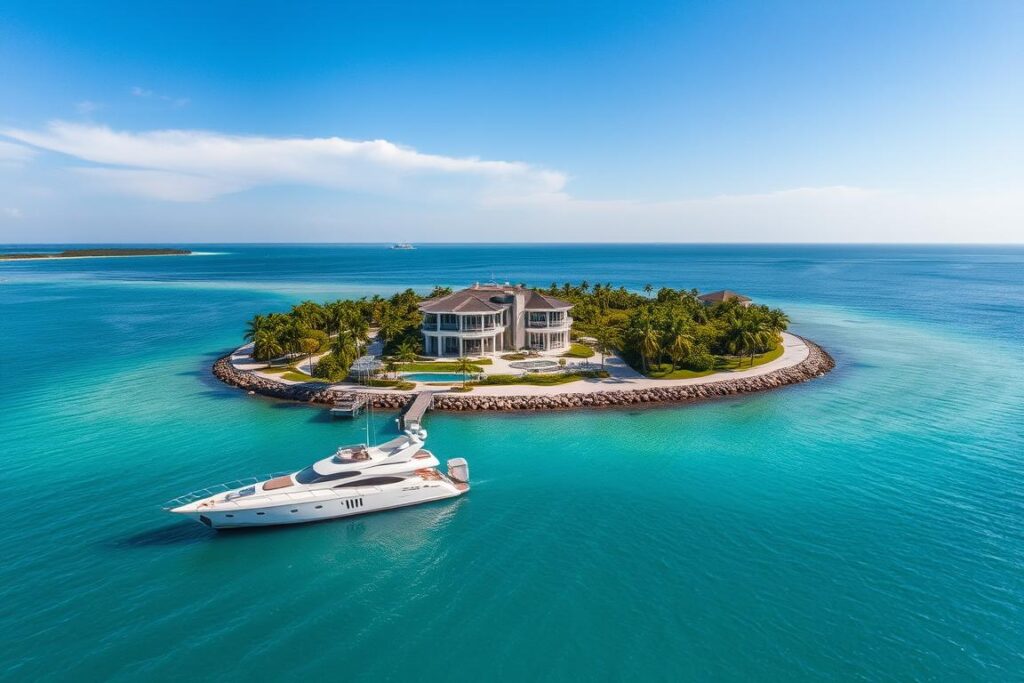
Jupiter Island estate and practice course
His 12-acre Jupiter Island compound includes a private practice golf facility. Valuations have ranged between $75 and $100 million.
The estate serves training needs between events and keeps him close to U.S. business and tour hubs during the season.
“Privacy” yacht and travel efficiencies
The $25 million yacht “Privacy” doubles as lifestyle and logistics. It offers coastal housing and efficient travel during parts of the year.
This kind of asset reduces hotel needs and adds flexibility while on the road for big golf events.
Gulfstream G550 and other high-value assets
The $54 million Gulfstream G550 is a time-optimization tool for a global schedule. A reported PGA Tour pension worth at least $20 million further stabilizes long-horizon planning.
- Asset appreciation: real estate can grow independently of on-course results.
- Liquidity note: high-value items add to reported totals but differ from cash.
- Career link: such purchases reflect how on-course success enabled long-term investments.
For a deeper profile and estimates, see this profile and estimates.
net worth tiger woods: verified figures vs. estimates
Different outlets often start with very different assumptions, and that drives wide gaps in reported totals.
Why Forbes’ $1.3B differs from other lists
Forbes uses a broad approach that adds private equity and asset appreciation to public payouts. Some lists cap the figure near $800M because they count only disclosed cash and prize money.

Valuation methods: cash earnings, equity stakes, and asset appreciation
Simple tallies focus on career earnings and prize money. Comprehensive estimates include stakes in a company, real estate gains, and brand ventures.
- Lists emphasizing cash miss unrealized gains in private deals.
- Equity in TMRW Sports or PopStroke can raise estimates materially.
- Net means assets minus liabilities and shifts each season with markets.
The takeaway: verified figures are contextual. Readers should compare methodology on any list to understand why a headline number moves up or down.
Also Read:
Career timeline: earnings through eras
From rookie months to late-career ventures, each era added a new layer to his financial story. The timeline below ties big wins, injuries, and brand moves to changes in income and influence.

1996–2002: rapid ascent and the first $100M
He turned pro in 1996 and won the 1997 Masters in just 228 days after his debut. Early deals with Nike, Titleist, and American Express pushed him past the first $100M milestone quickly.
Between 2000 and 2001 he completed the famous four-major run often called the “Tiger Slam,” a stretch that boosted prize earnings and global appeal.
2003–2010: dominance, endorsements, turbulence
These seasons mixed on-course dominance with growing off-course income. Long runs at number one and frequent wins translated into major sponsorship leverage.
Personal turbulence affected some partnerships, but his record and fan pull kept many deals active through the decade.
2011–2019: injuries, comeback, and the 2019 Masters
Multiple surgeries between 2014 and 2017 limited play. Still, he staged a signature comeback and won the 2019 Masters, a win that restored brand momentum and sponsor interest.
2020–present: PIP payouts, Sun Day Red, billionaire status
The Player Impact Program and selective scheduling changed how seasons deliver income. After leaving Nike, he launched Sun Day Red in 2024 and Forbes listed him near $1.3 billion by 2025.
- Quick facts: early majors led to fast wealth accumulation.
- Resilience: comebacks kept commercial value high despite age and limited starts.
- Legacy: course projects and new brands sustained long-term upside.
For a compact career snapshot and related comparisons, follow the link above for further reading.
Records and rankings that fueled his market value
A career of headline results turned sustained dominance into market value few athletes see. Clear, repeatable excellence made sponsorships and premium appearance fees a natural outcome.
Major wins, tour totals, and weeks at the top
He owns 15 major titles and 82 PGA Tour wins, tying the all-time tour mark.
That level of success includes 683 weeks as world number one. Brands pay for that kind of consistency.
Awards, lists, and signature slams
His ledger shows 11 PGA Player of the Year awards and eight Vardon Trophies.
He led the PGA Tour money list in 10 seasons and completed a career Grand Slam, plus the unique “Tiger Slam.”
- Performance equals pay: headline stats turned into commercial clout.
- Longevity: records and awards kept him relevant across age and eras.
- Broader lift: players, the tour, and golf sponsors all benefited from his draw.
Comparisons: how Tiger stacks up against today’s top earners
Reviewing all-time figures alongside recent prize spikes highlights shifting financial routes in golf.

All-time PGA Tour money leaders show clear gaps: Tiger Woods $120,999,166; Rory McIlroy $100,046,906; Scottie Scheffler $75,134,784 (all figures through March 31, 2025).
Rory McIlroy and Scottie Scheffler on the leaderboard
Rory and Scottie are closing the gap thanks to bigger purses and steady play. Higher prize money per event helps active players climb the tour list faster than in prior decades.
LIV era context and shifting economics
The LIV era changed how some earnings are counted. Certain players moved to alternate circuits, which removed some totals from official lists and altered endorsement and deal flows.
- Prize money: modern purses accelerate career earnings for current players.
- Brand value: his endorsement track remains the benchmark when managers and teams negotiate deals.
- Comparisons: apples-to-apples ranking gets harder as off-list income grows.
Impact of injuries, comebacks, and limited schedules on earnings
Long rehab stints and targeted comebacks reshaped how his seasons deliver cash and attention. Between 2014 and 2017 he had four back surgeries, then a major 2021 leg injury that limited starts like the 2022 Masters return. Those pauses changed the on-course math.
Prize money fell when appearances dropped, but the broader financial picture stayed stable. The emotional value of comeback wins — especially the 2019 Masters — kept sponsors engaged and fans tuned in. That narrative earns media time and brand premiums beyond a single season.

As age and recovery timelines shifted his focus, income moved toward business ventures and selective brand work. A reduced calendar does not mean fiscal decline when off-course deals and equity stakes stay strong.
For the PGA Tour and the sport, this model shows how a top player can stay central to golf economics with fewer starts. Strategic health management becomes a late-career lever. Fans’ interest in comebacks keeps media value high, which feeds endorsements even with limited rounds.
- Fewer starts = less prize money but concentrated attention.
- Comeback moments add long-term sponsor value.
- Diversified business activity cushions season-to-season swings.
For a compact career snapshot and related context, follow the linked summary.
Tiger’s influence on PGA Tour economics and player programs
His presence reshaped how the PGA Tour measures commercial value and pays players. Instead of counting only finishes, tour leaders began rewarding engagement, media reach, and event impact.
Player Impact Program payouts in 2021, 2023, and 2024
The Player Impact Program (PIP) paid headline sums tied to public interest. He won a reported $8M in 2021 for top engagement metrics.
In 2023 the top PIP figure rose to $12M, when another star briefly led the list. The 2024 payout landed at about $10M as metrics continued to evolve.
Strategic Sports Group era and player equity
After the Strategic Sports Group investment, the tour replaced PIP with a formal player equity program. That change shifted compensation toward long-term stakes in the company behind the league.
Players now earn both short-term payouts and ownership-style returns tied to media deals and event growth. This mirrors a broader trend in sports where personalities help build the product and share in future value.
- How it started: engagement and broadcast metrics drove PIP design.
- What changed: equity program rewards players for growing the tour and its world-wide appeal.
- Why it matters: events, fan interest, and digital reach now feed compensation beyond on-course results.
This shift shows how one major profile helped move money and attention into formal programs that treat players as partners, not just participants.
Where the money goes: philanthropy and TGR Foundation
The TGR Foundation turns visibility from the course into long-term support for youth education across the United States.
The foundation focuses on scholarships, STEM programs, and hands-on learning tied to his sports platform. Events and partnerships with corporate backers help raise both money and awareness.
Programs bring together a team of educators, volunteers, and local partners to scale outcomes. That approach mixes short-term grants with multi-year investments in schools and community centers.
Giving is framed as a long-horizon commitment. Foundation activities often use venues, events, and company collaborations to fund projects beyond direct donations.
- Focus: education, scholarships, and STEM
- Mechanics: events and partner funding
- Impact: teams of educators and volunteers scale programs
The foundation’s steady presence adds a human side to his financial story and links business success to community impact. For a concise external snapshot of earnings and philanthropy, see this profile and estimate.
Jupiter Island life: practice, business, and family in the United States
The Jupiter Island compound serves as both a training hub and a low-key business center for his projects. A private practice area sits on the estate and a mooring accommodates the yacht, making travel simple between events.
Close proximity to partners in the United States helps schedule meetings and brand activations around limited season starts. The location shortens travel to PGA Tour stops and speeds recovery days between trips.
The Woods Jupiter, opened in 2015, anchors a local restaurant presence that ties his golf identity to the community. That venue doubles as a casual meeting place and a loyal touchpoint for fans and collaborators.
Daily life here mixes light practice sessions with family routines and occasional business gatherings. The private setup lets him tune practice toward select season targets without full tour travel.
- Training: on-site practice for targeted preparation
- Business: easy access to meetings and brand partners
- Lifestyle: restaurant and marina support local engagement
This home base acts as a fulcrum for training, recovery, and hosting events. It’s a practical, performance-minded environment that extends a late-career window in professional golf.
What could change next: catalysts that may move his net worth
New commercial agreements, course projects, and media programs are likely to be the main catalysts for any big jumps in value over the next few years.
New brand deals post-Nike: After launching Sun Day Red with TaylorMade, fresh deals could expand product lines and global retail reach. A single high-profile deal or a broader licensing push can re-rate a company stake quickly.
Course design and hospitality growth
TGR Design’s pipeline and PopStroke’s U.S. expansion can create recurring revenue over multiple season cycles. New golf course projects often yield long-term fee streams and design annuities.
Media, tech, and event programming
TMRW Sports’ TGL program, paired with Full Swing simulators, aims to scale media rights and live-event income. That kind of programming can build sponsorship layers and boost audience engagement for golf and sports partners.
- Company moves: partnerships or capital raises can lift private valuations.
- Course wins: design contracts add steady fees, not single-season payouts.
- Prize money: modest increases help but rarely drive big shifts alone.
The biggest catalysts will be brand, program, and media developments rather than week-to-week results on the tour. Readers should watch for strategic company deals and scaled event programming as the top levers.
Final word on Tiger Woods’ wealth and legacy in sports
Few athletes have merged peak performance and business savvy as seamlessly in golf’s modern era.
He ranks among the greatest golfers by record and market impact: 15 majors, 82 PGA Tour wins and 683 weeks at world number one.
The 2025 Forbes estimate of about net worth ~$1.3 billion reflects layered income — prize money, career earnings, endorsement deals, equity stakes and high-value assets.
More than trophies, his influence changed how the PGA Tour and other groups measure player value and structure pay. That shift favors media, brand and venture growth over incremental tournament checks.
As a friendly closing thought: his career and comeback stories keep inspiring golfers and growing the audience for the sport. In the world of sports business, tiger woods remains the benchmark for competitive excellence and athlete entrepreneurship.
FAQ
What is Tiger Woods’ net worth in 2025 according to Forbes?
Forbes estimates his net worth at about
FAQ
What is Tiger Woods’ net worth in 2025 according to Forbes?
Forbes estimates his net worth at about $1.3 billion in 2025, reflecting combined on-course earnings, long-running endorsement deals, equity in companies, and real estate and other assets.
How did he cross the billionaire threshold?
He reached billionaire status through a mix of career prize money, lucrative lifetime endorsements (notably a multi-decade partnership with Nike), equity stakes in firms like TMRW Sports and PopStroke, high-value real estate on Jupiter Island, and wise reinvestment of earnings.
How much has he earned from official PGA Tour prize money?
Official PGA Tour career earnings are roughly $120,999,166, which represents tournament purses and does not include bonuses, appearance fees, or off-course income from sponsorships and business ventures.
What portion of his income comes from endorsements versus tournament winnings?
The majority of his lifetime earnings have come from endorsements, licensing, and equity deals rather than tournament purses. Endorsement lifetime totals during the Nike era alone have been reported near $700 million, with additional income from partners like Rolex, TaylorMade, and Bridgestone.
What are his major business ventures?
Key ventures include TGR Design (golf course architecture), TMRW Sports (tech-forward leagues and media), PopStroke (mini-golf and entertainment venues), and hospitality efforts such as The Woods Jupiter restaurant and related ventures on Jupiter Island.
How do appearance fees and the Player Impact Program affect his earnings?
Appearance fees for select global events and payments from the PGA Tour’s Player Impact Program (PIP) and similar incentive programs have significantly boosted his off-course income, especially during seasons with limited tournament starts.
Why do Forbes’ estimates differ from other lists?
Valuations vary by methodology. Forbes typically combines reported cash earnings, estimated endorsement income, equity valuations, and asset appreciation. Other lists may use conservative asset values, exclude private-equity stakes, or focus only on liquid cash.
What luxury assets contribute to his overall financial picture?
High-value assets include his Jupiter Island estate with a private practice course, a Gulfstream G550 (or equivalent) business jet, and a private yacht. These holdings add meaningful value beyond cash and investments.
How have injuries and a limited playing schedule affected his earnings?
Injuries reduced tournament appearances and on-course income during several seasons, but endorsement deals, appearance fees, and business income helped offset those losses. Comebacks, like the 2019 Masters win, often spurred renewed commercial interest.
How have his records and achievements influenced his marketability?
Historic achievements — 15 major championships, 82 PGA Tour wins, and hundreds of weeks at world No. 1 — elevated his global profile, making him one of the most marketable athletes ever and driving premium brand partnerships and media opportunities.
How does he compare to today’s highest earners in golf like Rory McIlroy and Scottie Scheffler?
He remains a top earner historically due to decades of elite performance and long-term deals. Contemporary players such as Rory McIlroy and Scottie Scheffler have strong prize money and sponsorships, but few match the cumulative endorsement and equity value accumulated over his career.
What role does philanthropy play in his finances?
The TGR Foundation directs a portion of his resources toward youth education and sports programs. Philanthropy influences tax planning and legacy planning and is an important public-facing element of his overall financial and personal strategy.
Which recent brand moves have shaped his post-Nike era?
After the end of the long Nike era, he signed or expanded relationships with brands such as TaylorMade, Rolex, Bridgestone, Gatorade, EA Sports, and launched his own Sun Day Red apparel and beverage ventures, which together help sustain and grow his income streams.
What future catalysts could increase his estimated fortune?
Potential drivers include expanded TGR Design projects, growth of PopStroke locations, new media and event products from TMRW Sports and TGL, additional equity deals, and continued appreciation of prime real estate holdings on Jupiter Island.
How are equity stakes and private-business valuations estimated for public rankings?
Analysts estimate private stakes using comparable-company multiples, reported funding rounds, revenue estimates, and known ownership percentages. Those valuations introduce variability, which explains differences across reporting outlets.
Where does most of his off-course income get generated geographically?
Off-course income comes from a global mix — U.S. markets (endorsements, hospitality, PopStroke expansion), Asia (appearance fees and sponsorships), and Europe (events and licensing) — reflecting his worldwide brand appeal and tournament footprint.
.3 billion in 2025, reflecting combined on-course earnings, long-running endorsement deals, equity in companies, and real estate and other assets.
How did he cross the billionaire threshold?
He reached billionaire status through a mix of career prize money, lucrative lifetime endorsements (notably a multi-decade partnership with Nike), equity stakes in firms like TMRW Sports and PopStroke, high-value real estate on Jupiter Island, and wise reinvestment of earnings.
How much has he earned from official PGA Tour prize money?
Official PGA Tour career earnings are roughly 0,999,166, which represents tournament purses and does not include bonuses, appearance fees, or off-course income from sponsorships and business ventures.
What portion of his income comes from endorsements versus tournament winnings?
The majority of his lifetime earnings have come from endorsements, licensing, and equity deals rather than tournament purses. Endorsement lifetime totals during the Nike era alone have been reported near 0 million, with additional income from partners like Rolex, TaylorMade, and Bridgestone.
What are his major business ventures?
Key ventures include TGR Design (golf course architecture), TMRW Sports (tech-forward leagues and media), PopStroke (mini-golf and entertainment venues), and hospitality efforts such as The Woods Jupiter restaurant and related ventures on Jupiter Island.
How do appearance fees and the Player Impact Program affect his earnings?
Appearance fees for select global events and payments from the PGA Tour’s Player Impact Program (PIP) and similar incentive programs have significantly boosted his off-course income, especially during seasons with limited tournament starts.
Why do Forbes’ estimates differ from other lists?
Valuations vary by methodology. Forbes typically combines reported cash earnings, estimated endorsement income, equity valuations, and asset appreciation. Other lists may use conservative asset values, exclude private-equity stakes, or focus only on liquid cash.
What luxury assets contribute to his overall financial picture?
High-value assets include his Jupiter Island estate with a private practice course, a Gulfstream G550 (or equivalent) business jet, and a private yacht. These holdings add meaningful value beyond cash and investments.
How have injuries and a limited playing schedule affected his earnings?
Injuries reduced tournament appearances and on-course income during several seasons, but endorsement deals, appearance fees, and business income helped offset those losses. Comebacks, like the 2019 Masters win, often spurred renewed commercial interest.
How have his records and achievements influenced his marketability?
Historic achievements — 15 major championships, 82 PGA Tour wins, and hundreds of weeks at world No. 1 — elevated his global profile, making him one of the most marketable athletes ever and driving premium brand partnerships and media opportunities.
How does he compare to today’s highest earners in golf like Rory McIlroy and Scottie Scheffler?
He remains a top earner historically due to decades of elite performance and long-term deals. Contemporary players such as Rory McIlroy and Scottie Scheffler have strong prize money and sponsorships, but few match the cumulative endorsement and equity value accumulated over his career.
What role does philanthropy play in his finances?
The TGR Foundation directs a portion of his resources toward youth education and sports programs. Philanthropy influences tax planning and legacy planning and is an important public-facing element of his overall financial and personal strategy.
Which recent brand moves have shaped his post-Nike era?
After the end of the long Nike era, he signed or expanded relationships with brands such as TaylorMade, Rolex, Bridgestone, Gatorade, EA Sports, and launched his own Sun Day Red apparel and beverage ventures, which together help sustain and grow his income streams.
What future catalysts could increase his estimated fortune?
Potential drivers include expanded TGR Design projects, growth of PopStroke locations, new media and event products from TMRW Sports and TGL, additional equity deals, and continued appreciation of prime real estate holdings on Jupiter Island.
How are equity stakes and private-business valuations estimated for public rankings?
Analysts estimate private stakes using comparable-company multiples, reported funding rounds, revenue estimates, and known ownership percentages. Those valuations introduce variability, which explains differences across reporting outlets.
Where does most of his off-course income get generated geographically?
Off-course income comes from a global mix — U.S. markets (endorsements, hospitality, PopStroke expansion), Asia (appearance fees and sponsorships), and Europe (events and licensing) — reflecting his worldwide brand appeal and tournament footprint.
Athlete earningsEndorsement IncomeFinancial successGolf CareerInvestment PortfolioProfessional GolferSponsorship dealsTiger Woods Net WorthTournament PrizesWealth Accumulation
Hey there! I'm Jillian Hunt. I'm all about diving into the financial side of celebrities' lives and sharing those juicy details with you. I love turning complicated money stuff into fun and easy reads. Whether it's checking out how a newbie is making waves or seeing what the big names are doing with their cash, I'm here to give you the scoop in a way that's both interesting and easy to understand.