













Kim Kardashian Net Worth: How Rich is the Reality TV Star?
 Jillian Hunt
November 25, 2025 1:49 am
.
25 min read
Jillian Hunt
November 25, 2025 1:49 am
.
25 min read

She turned a hit reality show into a global business engine. Today her estimated fortune tops 1.7 billion, driven largely by SKIMS and a growing skincare line launched in 2022.
That rise maps a path from TV fame to serious consumer brands. Equity stakes, selective deals, producer credits and valuable Los Angeles estate holdings all feed her wealth.
Readers will see how brand credibility turned attention into product demand and revenue. This intro previews a clear guide that traces earnings milestones, funding events and how private valuations shaped a celebrity into a top-tier entrepreneur in the world of fame and commerce.
Today’s Snapshot: Kim Kardashian’s Fortune at a Glance
Today her financial picture is driven less by TV checks and more by multi‑brand equity and private market marks.
Current estimate: Multiple outlets put kim kardashian’s net worth near 1.7 billion as of 2025. That headline figure reflects sizable paper value tied to private company marks rather than only cash on hand.
What underpins the valuation
Key drivers are concentrated equity stakes and rapid revenue growth at SKIMS. A July 2023 funding round raised $270 million at a $4 billion valuation.
- SKIMS revenue momentum: roughly 500 million in 2022 and about 750 million in 2023, with reports of further gains in 2024.
- Complementary assets: SKKN by Kim, legacy media credits, endorsements and past sales (20% of KKW Beauty to Coty) add supplemental value.
- Market sensitivity: the reported number is largely a function of recent valuation marks—meaning market appetite, margins, and scale can raise or compress the figure.
Takeaway: The kardashian net snapshot shows how ownership in a fast‑scaling consumer company can turn brand capital into billionaire‑level paper value.
kim kardashian net worth: The Core Drivers Behind the Billionaire Status
Her billionaire status stems from a mix of concentrated company ownership and steady income tied to media and product lines.
Equity in SKIMS and SKKN by Kim
She holds roughly a one‑third stake in SKIMS, which at a $4 billion valuation implies about $1.32 billion on paper. That ownership in a leading shapewear and apparel company is the single largest value driver.
SKKN by Kim and the earlier sale of 20% of KKW Beauty to Coty for $200 million show a pattern: build a brand, scale revenue, then capture partial liquidity.

Media deals, endorsements, and producer credits
Media roles and reality franchise ties create recurring cash flow and amplify product launches. Endorsements and social campaigns convert fame into high‑margin revenue.
Real estate and other assets that add millions
Property holdings — from a Hidden Hills compound to a Malibu estate — add meaningful, tangible value. Real estate is smaller than equity but it diversifies the balance sheet and supports long‑term wealth.
- Ownership concentration: a large stake magnifies upside when valuations rise and increases exposure if sentiment shifts.
- Business mix: combined beauty, apparel, media, and property create a durable, diversified base for sustained value.
SKIMS, Valuation Waves, and Ownership Stakes
SKIMS climbed quickly from a niche startup to a headline-grabbing consumer company backed by large institutional checks.

From startup to a $4 billion brand after the 2023 funding round
The company closed a July 2023 funding round that raised $270 million at a $4 billion value.
Earlier marks moved from about $1.6 billion in 2021 to $3.2 billion in 2022, showing steep investor appetite for the brand.
Estimated revenue trajectory: $500 million to $750 million and beyond
Reported revenue ran near 500 million in 2022 and roughly 750 million in 2023.
Multiple outlets noted acceleration into 2024, signaling a path toward $1 billion as category reach widened.
Stake math: how a one-third stake translates to over $1.3 billion on paper
With founders believed to hold about one-third each, a one-third stake implied roughly $1.32 billion on paper after the 2023 mark.
This single holding forms a central pillar of the broader discussion around kardashian net worth and balance-sheet value.
Expansion plays: menswear, NBA/WNBA partnerships, and retail roadmap
Beyond core shapewear, the company moved into menswear and partnered as the official underwear partner for the NBA and WNBA.
Those moves, plus wholesale and select physical retail plans, broaden addressable markets for a fashion-forward brand.
Also Read:
- Why it matters: strong brand velocity and unit economics drew funding and higher multiples.
- Risks: supply chain, competition, and fashion cycles can compress private-company marks.
- Context: paper value shifts fluidly while tangible assets like real estate and cash balance portfolio risk.
Inside the Beauty Empire: KKW Beauty, SKKN by Kim, and the Coty Deal
The beauty division proved its commercial value with a deal that changed everything. In June 2020 she sold a 20% stake in KKW Beauty to Coty for coty 200 million, setting a $1 billion valuation and delivering meaningful liquidity.
Why that 2020 sale mattered
The sold stake kkw helped validate the product strategy and showed investors the business could scale beyond celebrity channels. That validation unlocked funds to expand R&D, marketing, and operations.
Coty’s distribution muscle also opened wholesale and global reach, giving select launches the potential to sell in new markets and drive millions in added revenue.
How SKKN by Kim fits versus SKIMS
After a 2022 rebrand to skkn kim, the line shifted toward prestige skincare while SKIMS remained the fast-growth apparel engine.
- SKU strategy: SKKN focused on premium, higher‑margin drops.
- Scale: Coty partnership added distribution scale to limited launches.
- Impact: beauty contributes millions, but SKIMS’ equity marks drive a larger share of overall valuation.
For a detailed timeline and valuation context, see the kardashian net profile.
Reality TV and Media: The Engine of Fame and Ongoing Income
Television turned a family name into a perpetual publicity engine that fuels product launches and licensing deals. Long runs on a hit reality series created steady visibility that links directly to business performance.

From “Keeping Up with the Kardashians” to Hulu’s “The Kardashians”
She rose to prominence on E!’s Keeping Up with the Kardashians, a 20-season run that built long-term cultural reach.
That platform led to a reported nine-figure streaming deal for Hulu’s The Kardashians, showing how modern media economics reward top-tier franchises.
Nine-figure franchise deals and executive producer value
Executive producer credits give creative control and extra revenue. They also let a star time launches and shape narratives around product drops.
Appearances, hosting stints, and the pop culture flywheel
High-profile appearances — including a well-received Saturday Night Live turn — keep engagement high and drive traffic spikes to company sites.
- Visibility: Episodes create measurable uplifts in traffic and conversions.
- Fees: Appearances add millions and expand negotiating leverage.
- Flywheel: Media keeps the celebrity relevant, which sustains brand demand and boosts long-term net worth.
Instagram, Brands, and Endorsements: Millions per Campaign
Her social feed acts like a direct-response ad channel that can empty inventory within hours.

Rates per post reported in court filings ranged from $300,000 to $1 million. Those figures reflect high engagement and a curated audience that buys.
Rates per post: $300,000 to $1 million, and why selectivity pays
She picks partnerships that align with existing brands and protect long-term pricing power.
This selectivity keeps partner value high and preserves the credibility that fuels repeat campaigns.
Also Read:
How social media turns product drops into sell-outs
Instagram endorsements can generate million per campaign returns and million per year flows from sponsored posts.
Owned channels amplify those paid efforts. A timed post plus an email and a site drop often causes SKIMS items to sell out in hours.
- Direct revenue: sponsored posts convert attention into fast money.
- Owned advantage: first-party launches capture margin and data.
- Fashion storytelling: lifestyle imagery boosts loyalty and discovery.
For context on how media presence builds broader business value, see the team page at about the brand. The combined effect of social monetization and owned commerce helps explain the larger kardashian net figure and contributes to overall net worth.
Prime Real Estate: Hidden Hills, Malibu, and Beyond
From gated privacy to coastal drama, her property moves show a clear mix of lifestyle and investment. High-end homes add stability and visible prestige alongside business holdings.

The minimalist Hidden Hills compound and the $23 million buyout
The signature Hidden Hills compound is known for minimalist design and sprawling privacy. In September 2021 she bought out Kanye West’s share for $23 million, consolidating ownership and simplifying the asset picture.
The lot expanded to about 7.5 acres and includes amenities that boost liveability and resale value.
$70 million Malibu bluff estate and coastal prestige
In September 2022 she added a Malibu bluff estate for about $70 million. That trophy purchase signals a taste for coastal prestige and long-term appreciation.
Past flips: Bel Air gains and Los Angeles footprint
Earlier flips show savvy timing: a Bel Air buy at roughly $9 million later sold for about $18 million. Those moves expand a foothold across Los Angeles neighborhoods and help diversify a larger fortune.
- Expanded acreage and design choices increase lifestyle value.
- Operational costs and risk mitigation, including private firefighters during wildfires, are real parts of owning elite property.
- Real estate is a smaller slice than company equity but still lifts overall kardashian net worth and offers durable upside in a global market.
Other Assets, Investments, and Business Lines
Small tech and retail bets taught valuable lessons about audience, monetization, and timing. Early experiments showed how pop moments turn into repeatable commerce and influence future product strategy.
Mobile apps and the Kimoji era
The 2014 release of Kim Kardashian: Hollywood became a top‑grossing mobile game. It proved a celebrity could launch a digital product that scales.
Kimoji and related apps turned social attention into microtransactions. They built direct lines to fans and sharpened skills in acquisition, retention, and in‑app sales.

Legacy retail moments: DASH as a fashion springboard
DASH boutiques acted as a hands‑on lab for merchandising, customer service, and brand building. Those stores influenced early 2000s fashion trends and taught practical retail lessons.
While smaller today, these ventures diversified income and created partnerships across tech, media, and beauty. The experience fed later product launches and helped structure the modern company playbook.
- Proof of concept: apps showed fans would transact at scale.
- Retail lab: DASH taught merchandising and brand cadence.
- Legacy: these lines spun out talent, partners, and data used in bigger bets.
These assets may not carry the same headline value as SKIMS, but they formed the foundation that raised overall kardashian net and informed long‑term net worth strategy. For broader context, see the richest kardashians 2025 overview and a related profile at FameWorth.
Net Worth Timeline: How She Reached the Billion-Dollar Club
A steady string of smart exits and back-to-back funding rounds turned early fame into scalable enterprise value.

Milestones from early millions to headline figures
Early checkpoints tracked modest increments: about $10 million in 2009, then $20 million in 2011 and $40 million by 2013.
By 2017 estimates reached $150 million, rising to $300 million in 2019 and roughly $900 million in 2020.
Inflection points that changed the math
The 2020 Coty deal — often cited as coty 200 million — was a major inflection. Selling a 20% stake kkw beauty crystallized brand value and unlocked capital.
SKIMS funding rounds followed: a 2021 round at a $1.6 billion mark, a 2022 step to $3.2 billion, and a 2023 raise that valued the company near $4 billion.
When the third comma arrived
Crossing $1 billion happened in 2021 as private-company marks and liquidity events aligned. Rapid revenue growth — about 500 million in 2022 and ~750 million in 2023 — justified later rounds and pushed reported value to a reported worth 1.7 billion by 2024.
Real estate gains and millions in ancillary earnings provided diversification, but equity stakes and funding momentum drove the biggest jumps in kardashian net worth.
How Kim Compares: The Richest Kardashian and the Celebrity Billionaires Club
Few entertainers convert a reality show platform into a business empire large enough to join the celebrity billionaire club. A reported 1.7 billion estimate places her above siblings who range in the tens to low hundreds of millions.
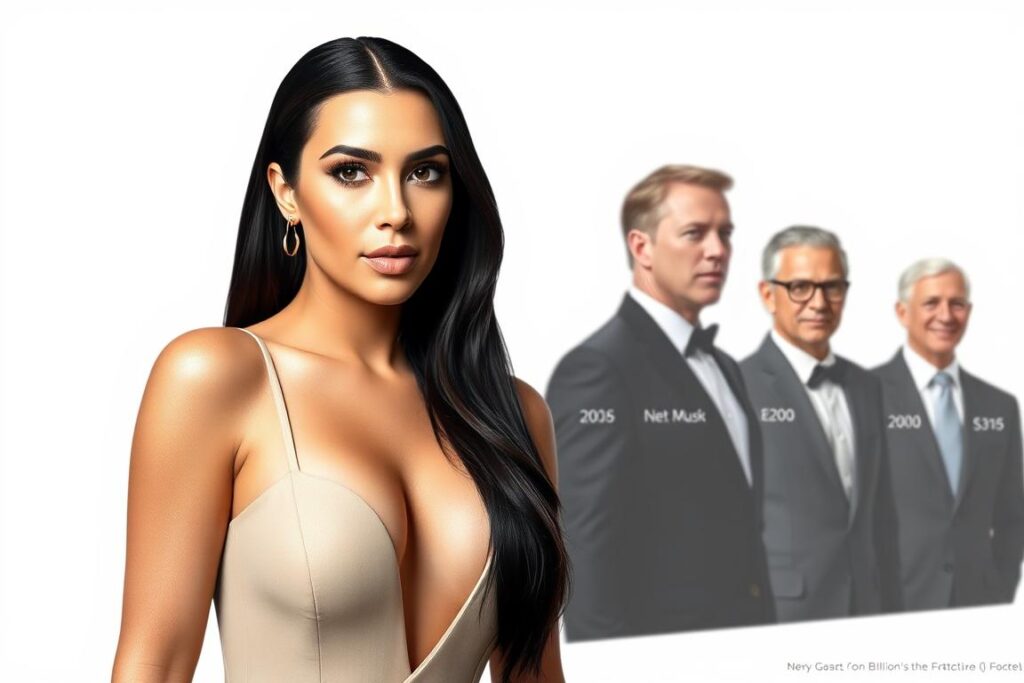
Is she the richest sibling?
Yes. That figure ranks her as the wealth leader in the family. Siblings built strong businesses and media careers, but their portfolios remain smaller in scale and equity concentration.
Where 1.7 billion sits among celebrity billionaires
Forbes lists her alongside a short roster of celebrity billionaires like Jay‑Z, Rihanna, LeBron James, Oprah Winfrey, and Michael Jordan. The common thread is durable brands and global audiences that translate into scalable revenue.
- Producer and show leverage: media roles provide distribution and recurring income beyond product sales.
- Fashion and real estate: SKIMS equity drives headline value while estate holdings add stable, tangible assets.
- Million‑per endorsement: sponsored posts and select deals still add meaningful cash but are secondary to core equity.
Takeaway: Similar headline fortunes mask different risk profiles. Her mix of concentrated company ownership, producer credits, and property gives a different upside than peers who lean on liquor brands, sports rights, or content libraries.
For a family ranking and more context, see the richest Kardashian family ranking.
Philanthropy and Influence: Criminal Justice Reform and Public Impact
Beyond headlines, her public work shows how celebrity influence can reshape conversations about justice and policy. Advocacy moved a clemency case into the public eye and helped spark broader debate on sentencing reform.

Clemency advocacy and legal studies
She backed the Alice Marie Johnson clemency appeal and used interviews and legal partnerships to sustain attention. That effort paired celebrity reach with lawyers and nonprofits to produce real results.
Simultaneously, she pursued legal study to gain deeper system knowledge. This learning showed a long-term commitment beyond publicity.
Brand value beyond business: media, culture, and social change
Pop culture reach helped mobilize audiences, fundraise, and center complex issues across the world. Strategic communications — documentaries, press, and social posts — elevated stories that might otherwise stay hidden.
- Trust: consistent advocacy adds credibility to product launches and the beauty and fashion lines, including skkn kim.
- Partnerships: collaborations with legal experts ensure work is substantive, not just performative.
- Legacy: philanthropy complements fame and strengthens the brand narrative beyond business and the kardashian net profile.
Methodology Matters: How Celebrity Net Worths Are Estimated
A reliable estimate starts by mapping ownership, past transactions, and how private company marks were set.
Analysts combine public filings, reported funding rounds, and known sales to build a working picture. For example, a 2023 mark that valued SKIMS at about $4 billion and an estimated one‑third stake drive headline numbers for kim kardashian and her reported net worth.
Paper value differs from cash. Equity in a private company can create large implied value but is tied to market multiples, vesting schedules, and liquidity windows.
- Ownership and stake: percent owned often dominates overall value calculations.
- Past deals: sales like Coty’s $200 million for 20% of KKW Beauty set benchmarks for implied valuations.
- Real assets and debt: property appraisals, liabilities, and tax treatment adjust final totals.
Readers should view headline figures as directional. Estimates change with funding cycles, consumer demand, interest rates, and the simple fact that money locked in a company is not the same as liquid capital.
What’s New Now: Present-Day Updates on Value, Funding, and IPO Signals
Recent company milestones and market chatter make this a pivotal moment for SKIMS and its valuation path.
SKIMS performance checks and talk of future rounds
Reported revenue momentum and a July 2023 mark at about $4 billion have investors watching. Multiple outlets suggested the brand approached or surpassed $1 billion in sales by 2024.
Strategic choices now include another funding round versus tightening profitability before any public filing. Each option affects dilution, control, and long‑term value for the founder and early backers.
Market conditions that could move valuations up or down
Macro forces matter: interest rates, consumer demand, and retail multiples can lift or compress private company marks. Sector comps in apparel and fashion influence what investors will pay.
- Operational signals — inventory turns, return rates, and sell‑through — show brand health.
- Category expansion and high‑profile collaborations help sustain top‑line growth without diluting core equity.
- Governance readiness — audits, reporting cadence, and leadership depth — is a key part of any IPO pathway.
While an IPO is not guaranteed, ongoing investor interest and steady performance mean these dynamics will remain a visible part of discussions about kim kardashian net and broader kardashian net worth updates as markets evolve.
From Reality Star to Mogul: The Big Picture on Kim Kardashian’s Wealth
What began as a reality platform became a layered business and estate portfolio. A one‑third stake in SKIMS after a $4 billion mark sits at the center of a reported 1.7 billion headline figure.
The 2020 sale of 20% of KKW Beauty to Coty validated her approach and unlocked growth capital. Media deals and paid partnerships keep demand high and sales consistent for shapewear and fashion drops.
Real estate — from a Hidden Hills compound to a $70 million Malibu estate — adds tangible balance to the paper value created by private rounds. For a fuller profile, see the net worth profile.
Bottom line: headline numbers like 1.4 billion and the later jump to 1.7 billion reflect major valuation events. Private marks can change, but brand focus, disciplined execution, and cultural relevance position the fortune to keep compounding.
FAQ
What is the current estimate of her fortune?
Financial reporters and business outlets peg the figure at about
FAQ
What is the current estimate of her fortune?
Financial reporters and business outlets peg the figure at about $1.7 billion, a number driven largely by her stakes in apparel and beauty businesses, media deals, endorsements, and a sizable real estate portfolio.
Which businesses contribute most to that valuation?
The largest contributors are SKIMS (shapewear and apparel) and SKKN by Kim (beauty), followed by media income from reality TV and producer credits, high-value endorsement deals, and property holdings in Los Angeles and Malibu.
How did SKIMS reach its reported valuation?
SKIMS grew from a direct-to-consumer startup into a multibillion-dollar brand after rapid sales, strategic retail partnerships and a large 2023 funding round that pushed its valuation near $4 billion.
How much revenue does SKIMS generate?
Public estimates place annual revenue in a broad band between $500 million and $750 million, reflecting fast growth, seasonal product drops, and expansion into menswear and licensing partnerships.
What does a one-third stake in SKIMS mean on paper?
If the brand is valued around $4 billion, a roughly one-third ownership would translate to more than $1.3 billion in equity value before taxes, dilution or secondary sales are considered.
What was the Coty deal and why did it matter?
The beauty company Coty bought a 20% stake in the original beauty line for about $200 million. That transaction validated the brand’s market value and provided liquidity that helped boost overall wealth estimates.
How much does she earn from social posts and endorsements?
Top-tier campaigns command between $300,000 and $1 million per sponsored post. Selectivity and brand-fit make those gigs highly lucrative and help turn product drops into quick sell-outs.
How important is reality TV to income and fame?
Television—starting with Keeping Up with the Kardashians and continuing with Hulu’s The Kardashians—built the platform that fuels endorsements, product launches, and producing fees, creating a steady stream of high-margin media income.
What key real estate holdings factor into the fortune?
Notable properties include a Hidden Hills compound, a Malibu bluff estate, and past Los Angeles and Bel Air transactions. Together, these homes add tens of millions to the overall asset picture.
Have digital products and apps contributed meaningfully?
Yes. Early digital plays like Kimoji and paid apps generated direct revenue and demonstrated the ability to monetize audience engagement, paving the way for later brand extensions and commerce-first strategies.
How did the fortune grow from millions to billions?
Growth followed major inflection points: successful launches of apparel and beauty lines, the Coty transaction, a large SKIMS funding round, and expanding revenue streams from endorsements and media producing credits.
Is she the wealthiest member of the family?
Among siblings, she sits at the top in most published rankings due to her equity stakes in global consumer brands and diversified business deals, placing her among a small group of celebrity billionaires.
How do analysts estimate celebrity fortunes like hers?
Valuations combine reported transactions, equity stakes, revenue estimates for private companies, public comparables, endorsement rates, and real estate appraisals. Estimates vary by outlet and methodology.
Could the valuation change soon?
Yes. Future funding rounds, market conditions, retail performance, potential IPO activity and changes in endorsement demand can all push valuations up or down.
What philanthropic work does she support?
She has been active in criminal justice reform through clemency advocacy and legal studies support, using public influence to spotlight reforms and combine philanthropy with public impact.
.7 billion, a number driven largely by her stakes in apparel and beauty businesses, media deals, endorsements, and a sizable real estate portfolio.
Which businesses contribute most to that valuation?
The largest contributors are SKIMS (shapewear and apparel) and SKKN by Kim (beauty), followed by media income from reality TV and producer credits, high-value endorsement deals, and property holdings in Los Angeles and Malibu.
How did SKIMS reach its reported valuation?
SKIMS grew from a direct-to-consumer startup into a multibillion-dollar brand after rapid sales, strategic retail partnerships and a large 2023 funding round that pushed its valuation near billion.
How much revenue does SKIMS generate?
Public estimates place annual revenue in a broad band between 0 million and 0 million, reflecting fast growth, seasonal product drops, and expansion into menswear and licensing partnerships.
What does a one-third stake in SKIMS mean on paper?
If the brand is valued around billion, a roughly one-third ownership would translate to more than
FAQ
What is the current estimate of her fortune?
Financial reporters and business outlets peg the figure at about $1.7 billion, a number driven largely by her stakes in apparel and beauty businesses, media deals, endorsements, and a sizable real estate portfolio.
Which businesses contribute most to that valuation?
The largest contributors are SKIMS (shapewear and apparel) and SKKN by Kim (beauty), followed by media income from reality TV and producer credits, high-value endorsement deals, and property holdings in Los Angeles and Malibu.
How did SKIMS reach its reported valuation?
SKIMS grew from a direct-to-consumer startup into a multibillion-dollar brand after rapid sales, strategic retail partnerships and a large 2023 funding round that pushed its valuation near $4 billion.
How much revenue does SKIMS generate?
Public estimates place annual revenue in a broad band between $500 million and $750 million, reflecting fast growth, seasonal product drops, and expansion into menswear and licensing partnerships.
What does a one-third stake in SKIMS mean on paper?
If the brand is valued around $4 billion, a roughly one-third ownership would translate to more than $1.3 billion in equity value before taxes, dilution or secondary sales are considered.
What was the Coty deal and why did it matter?
The beauty company Coty bought a 20% stake in the original beauty line for about $200 million. That transaction validated the brand’s market value and provided liquidity that helped boost overall wealth estimates.
How much does she earn from social posts and endorsements?
Top-tier campaigns command between $300,000 and $1 million per sponsored post. Selectivity and brand-fit make those gigs highly lucrative and help turn product drops into quick sell-outs.
How important is reality TV to income and fame?
Television—starting with Keeping Up with the Kardashians and continuing with Hulu’s The Kardashians—built the platform that fuels endorsements, product launches, and producing fees, creating a steady stream of high-margin media income.
What key real estate holdings factor into the fortune?
Notable properties include a Hidden Hills compound, a Malibu bluff estate, and past Los Angeles and Bel Air transactions. Together, these homes add tens of millions to the overall asset picture.
Have digital products and apps contributed meaningfully?
Yes. Early digital plays like Kimoji and paid apps generated direct revenue and demonstrated the ability to monetize audience engagement, paving the way for later brand extensions and commerce-first strategies.
How did the fortune grow from millions to billions?
Growth followed major inflection points: successful launches of apparel and beauty lines, the Coty transaction, a large SKIMS funding round, and expanding revenue streams from endorsements and media producing credits.
Is she the wealthiest member of the family?
Among siblings, she sits at the top in most published rankings due to her equity stakes in global consumer brands and diversified business deals, placing her among a small group of celebrity billionaires.
How do analysts estimate celebrity fortunes like hers?
Valuations combine reported transactions, equity stakes, revenue estimates for private companies, public comparables, endorsement rates, and real estate appraisals. Estimates vary by outlet and methodology.
Could the valuation change soon?
Yes. Future funding rounds, market conditions, retail performance, potential IPO activity and changes in endorsement demand can all push valuations up or down.
What philanthropic work does she support?
She has been active in criminal justice reform through clemency advocacy and legal studies support, using public influence to spotlight reforms and combine philanthropy with public impact.
.3 billion in equity value before taxes, dilution or secondary sales are considered.
What was the Coty deal and why did it matter?
The beauty company Coty bought a 20% stake in the original beauty line for about 0 million. That transaction validated the brand’s market value and provided liquidity that helped boost overall wealth estimates.
How much does she earn from social posts and endorsements?
Top-tier campaigns command between 0,000 and
FAQ
What is the current estimate of her fortune?
Financial reporters and business outlets peg the figure at about $1.7 billion, a number driven largely by her stakes in apparel and beauty businesses, media deals, endorsements, and a sizable real estate portfolio.
Which businesses contribute most to that valuation?
The largest contributors are SKIMS (shapewear and apparel) and SKKN by Kim (beauty), followed by media income from reality TV and producer credits, high-value endorsement deals, and property holdings in Los Angeles and Malibu.
How did SKIMS reach its reported valuation?
SKIMS grew from a direct-to-consumer startup into a multibillion-dollar brand after rapid sales, strategic retail partnerships and a large 2023 funding round that pushed its valuation near $4 billion.
How much revenue does SKIMS generate?
Public estimates place annual revenue in a broad band between $500 million and $750 million, reflecting fast growth, seasonal product drops, and expansion into menswear and licensing partnerships.
What does a one-third stake in SKIMS mean on paper?
If the brand is valued around $4 billion, a roughly one-third ownership would translate to more than $1.3 billion in equity value before taxes, dilution or secondary sales are considered.
What was the Coty deal and why did it matter?
The beauty company Coty bought a 20% stake in the original beauty line for about $200 million. That transaction validated the brand’s market value and provided liquidity that helped boost overall wealth estimates.
How much does she earn from social posts and endorsements?
Top-tier campaigns command between $300,000 and $1 million per sponsored post. Selectivity and brand-fit make those gigs highly lucrative and help turn product drops into quick sell-outs.
How important is reality TV to income and fame?
Television—starting with Keeping Up with the Kardashians and continuing with Hulu’s The Kardashians—built the platform that fuels endorsements, product launches, and producing fees, creating a steady stream of high-margin media income.
What key real estate holdings factor into the fortune?
Notable properties include a Hidden Hills compound, a Malibu bluff estate, and past Los Angeles and Bel Air transactions. Together, these homes add tens of millions to the overall asset picture.
Have digital products and apps contributed meaningfully?
Yes. Early digital plays like Kimoji and paid apps generated direct revenue and demonstrated the ability to monetize audience engagement, paving the way for later brand extensions and commerce-first strategies.
How did the fortune grow from millions to billions?
Growth followed major inflection points: successful launches of apparel and beauty lines, the Coty transaction, a large SKIMS funding round, and expanding revenue streams from endorsements and media producing credits.
Is she the wealthiest member of the family?
Among siblings, she sits at the top in most published rankings due to her equity stakes in global consumer brands and diversified business deals, placing her among a small group of celebrity billionaires.
How do analysts estimate celebrity fortunes like hers?
Valuations combine reported transactions, equity stakes, revenue estimates for private companies, public comparables, endorsement rates, and real estate appraisals. Estimates vary by outlet and methodology.
Could the valuation change soon?
Yes. Future funding rounds, market conditions, retail performance, potential IPO activity and changes in endorsement demand can all push valuations up or down.
What philanthropic work does she support?
She has been active in criminal justice reform through clemency advocacy and legal studies support, using public influence to spotlight reforms and combine philanthropy with public impact.
million per sponsored post. Selectivity and brand-fit make those gigs highly lucrative and help turn product drops into quick sell-outs.
How important is reality TV to income and fame?
Television—starting with Keeping Up with the Kardashians and continuing with Hulu’s The Kardashians—built the platform that fuels endorsements, product launches, and producing fees, creating a steady stream of high-margin media income.
What key real estate holdings factor into the fortune?
Notable properties include a Hidden Hills compound, a Malibu bluff estate, and past Los Angeles and Bel Air transactions. Together, these homes add tens of millions to the overall asset picture.
Have digital products and apps contributed meaningfully?
Yes. Early digital plays like Kimoji and paid apps generated direct revenue and demonstrated the ability to monetize audience engagement, paving the way for later brand extensions and commerce-first strategies.
How did the fortune grow from millions to billions?
Growth followed major inflection points: successful launches of apparel and beauty lines, the Coty transaction, a large SKIMS funding round, and expanding revenue streams from endorsements and media producing credits.
Is she the wealthiest member of the family?
Among siblings, she sits at the top in most published rankings due to her equity stakes in global consumer brands and diversified business deals, placing her among a small group of celebrity billionaires.
How do analysts estimate celebrity fortunes like hers?
Valuations combine reported transactions, equity stakes, revenue estimates for private companies, public comparables, endorsement rates, and real estate appraisals. Estimates vary by outlet and methodology.
Could the valuation change soon?
Yes. Future funding rounds, market conditions, retail performance, potential IPO activity and changes in endorsement demand can all push valuations up or down.
What philanthropic work does she support?
She has been active in criminal justice reform through clemency advocacy and legal studies support, using public influence to spotlight reforms and combine philanthropy with public impact.
Business VenturesCelebrity WealthFashion MogulKardashian familyKeeping Up with the KardashiansKim KardashianNet Worthreality tv starSocial media influencer
Hey there! I'm Jillian Hunt. I'm all about diving into the financial side of celebrities' lives and sharing those juicy details with you. I love turning complicated money stuff into fun and easy reads. Whether it's checking out how a newbie is making waves or seeing what the big names are doing with their cash, I'm here to give you the scoop in a way that's both interesting and easy to understand.