







Michael Jordan’s Net Worth: How Much Is He Worth?
 Jillian Hunt
November 12, 2025 5:52 am
.
22 min read
Jillian Hunt
November 12, 2025 5:52 am
.
22 min read

One of the world’s richest celebrities now sits at an estimated $3.8 billion in 2025. He first crossed the billionaire threshold in 2014, and his story blends basketball glory with sharp business moves.
From a standout career at UNC in north carolina to six NBA titles with the Bulls, he turned defining game moments into lasting value. He played 15 NBA seasons, later joined ownership with the Charlotte Hornets, and sold a majority stake in 2023.
The Air Jordan sneaker line, launched in 1984 with Nike, remains a major cash engine. This introduction previews how on-court salary, endorsements, equity stakes, and recurring royalties combine to make his financial profile unique.
Read on for a clear snapshot of his net worth today, the main income drivers, myth-busting on salaries versus royalties, and actionable takeaways for fans and investors.
Michael Jordan’s net worth today: the 2025 snapshot
Valuations differ because several large pieces of his portfolio are private or tied to long-term royalties. One set of public estimates puts his fortune at about $3.8 billion in 2025; another arrives near $3.5 billion.
Those gaps come from how analysts value private equity, forecast apparel royalties, and treat proceeds from the 2023 sale of his majority stake in the Charlotte Hornets.
- The 2025 snapshot places him in the billionaire tier with a range of $3.5–$3.8B.
- Differences hinge on royalty models, tax treatments, and timing of large cash events.
- His off-court earnings now dwarf career paychecks, keeping his wealth near the top of global celebrity lists.
Across the world of famous earners, he remains a standout due to durable brand demand and smart equity moves. Fans should view small estimate differences as technical, not a dispute over his billionaire status.
michael jordan net worth: the core drivers behind his billionaire status
Basketball highlights gave him cultural clout; strategic business moves turned clout into compound earnings. His rise from a north carolina standout to global icon created a narrative that keeps products selling across generations.

Enduring brand power grew from on-court legend into a lifestyle halo that still drives purchases. The Air Jordan line, launched in the 1980s, converts nostalgia and new drops into steady sales and recurring royalties.
Ownership wins and timely exits
Equity in a team and smart timing on sales multiplied his holdings. Selling a majority stake in the Hornets in 2023 crystallized large gains while he kept a minority position for ongoing upside.
Licensing and royalties that compound
Long-term licensing deals and curated endorsements created layered earnings streams. Royalties scale during retro cycles and limited releases, so passive income grows with each cultural moment.
- Brand durability: fandom converts to revenue over time.
- Equity strategy: ownership plus timely exits realized value.
- Royalties & endorsements: steady compounding income.
How his NBA salary fits into the bigger wealth picture
The player’s on-court pay was impressive for its era, but it never eclipsed his business earnings.
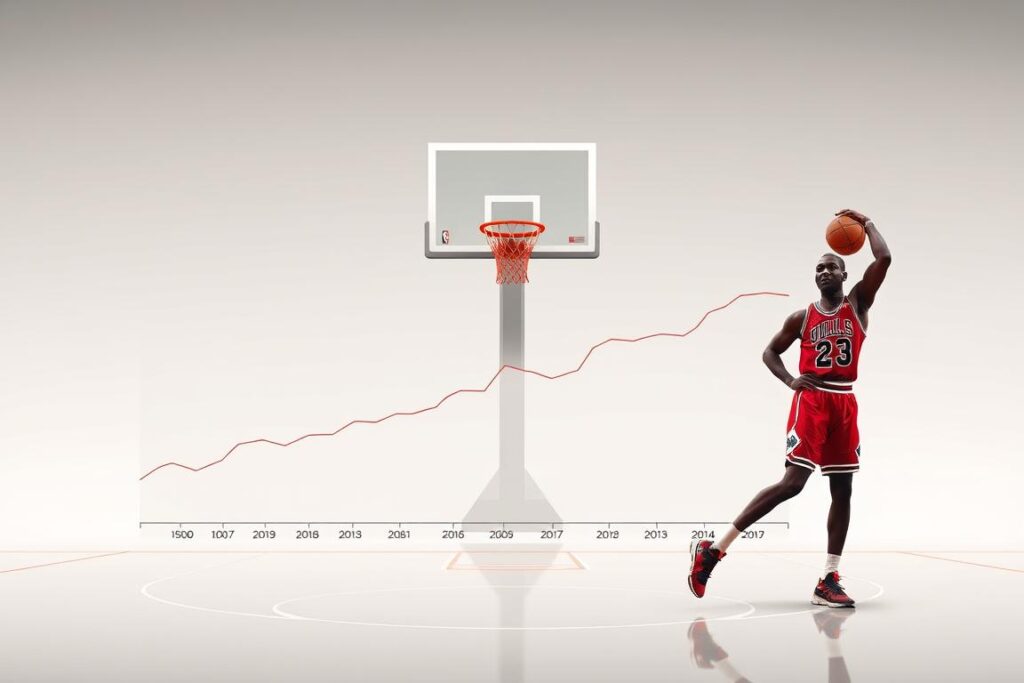
Across his nba career he earned $93.7 million in salary. Those paychecks matter historically, yet they are a small slice of lifetime wealth compared with endorsements and equity.
He broke a ceiling late in his career with back-to-back $30M-plus years. In 1996–97 he made $30.14 million, then $33.14 million in 1997–98. He was the league’s highest-paid player for only two seasons.
Those year-by-year highs arrived during peak Bulls dominance, when massive TV audiences and merchandise demand amplified his platform.
- Salary totals: $93.7M across his playing years.
- Landmark seasons: $30.14M (1996–97) and $33.14M (1997–98).
- Highest-paid status lasted two seasons, showing off-court value was crucial.
Understanding his pay helps fans separate game earnings from long-term brand income. For a detailed profile, see the detailed profile.
Air Jordan and Nike: the royalty engine fueling long-term wealth
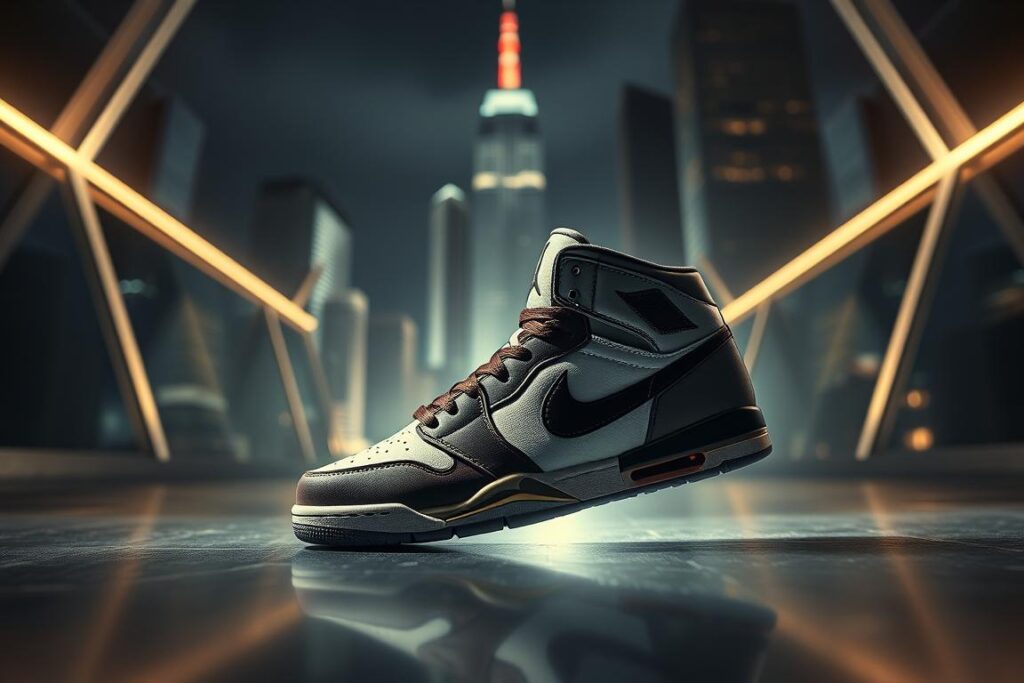
What began as a modest annual payment in 1984 became the backbone of an iconic apparel empire. The original pact paid $500,000 per year plus royalties and set a new blueprint for athlete compensation.
The original 1984 deal: $500,000 per year plus royalties
The 1984 agreement tied a signature shoe to ongoing payments. That structure let royalty income scale as popularity rose.
From signature sneaker to global brand powerhouse
Over time, the Air Jordan line became a standalone business. Collaborations, retros, and lifestyle drops turned shoes into cultural tokens.
Annual payouts and why this stream remains his anchor
Today the Jordan Brand brings massive annual payouts, in some reports approaching nearly $300 million per year to Nike’s related business. Those streams keep him financially anchored long after his last game.
How cultural moments keep Air Jordans selling
- Heritage: iconic shots and game memories fuel demand.
- Scarcity: limited releases and anniversaries create buying surges.
- Cross-over appeal: basketball roots plus streetwear reach new audiences.
Early endorsement deals proved the template: share upside, reward long-term brand growth, and turn a signature product into perennial income.
Also Read:
Endorsements beyond Nike: the $300-$400 million per year machine
Brand partnerships outside the sneaker business have become a major income stream. Over his career he has earned more than $2 billion from endorsements.
Even today, estimates put annual earnings from deals and business partnerships between $300 and $400 million per year. That figure includes recurring payouts and structured back-end revenue.

Gatorade, McDonald’s, Coca-Cola and more
His roster of partners spans beverages, quick service, and global consumer brands. Names like Gatorade, McDonald’s, and Coca-Cola helped him reach beyond basketball fans.
Why he still commands premium deals
As a player turned icon, his image signals excellence and competitive spirit. Brands pay premium money to align with that story at any time.
- Wide appeal: team and championship narratives boost campaign impact.
- Longevity: marketers refresh his career moments to sell today.
- Reliable returns: campaigns drive measurable sales, not just visibility.
In short, michael jordan’s endorsements extend far beyond sneakers and remain a core reason off-court money dwarfs what he earned during the game.
Charlotte Hornets: from majority owner to strategic exit
Ownership gave him a new platform to convert reputation into equity gains as pro team values climbed.

He first became part-owner and head of basketball operations in 2006, then bought a controlling interest in 2010. That purchase increased his public profile and tied a portion of his wealth to franchise valuation.
By 2014 he hit billionaire status, and equity in the franchise was a clear catalyst. Rising valuations, including a roughly 1.5 billion estimate by 2019, showed how much the investment appreciated.
Key ownership milestones
- Acquired control: purchased the majority stake in 2010 and built equity over the next decade.
- Partial sales: sold pieces in 2019 to crystallize gains and diversify holdings.
- Strategic exit: sold the majority stake in 2023 but kept a minority stake to share future upside.
The arc from owner to partial seller demonstrates how timing, market tailwinds, and patient capital can turn sports fame into lasting financial value for an nba team and beyond.
Other ventures that add to MJ’s wealth portfolio
Investments in a NASCAR team and consumer businesses illustrate a playbook of strategic diversification. He pairs legacy recognition with new markets to spread risk and capture fresh revenue.

23XI Racing and expansion into motorsports
Co-owning 23XI Racing extended his influence into another major U.S. sports league.
The team venture turned cultural cachet into commercial potential by attracting sponsors and broadening audience reach beyond basketball fans.
Restaurants, dealerships, and selective equity positions
He also owns restaurants and a car dealership and takes selective equity positions that fit his brand.
Also Read:
The deals he pursues favor durable categories where a famous name can unlock distribution and marketing benefits.
- Diversification: motorsports and operating companies add cash flow beyond royalties.
- Partial stakes: share risk while keeping upside tied to performance and growth.
- Long-term view: over time these holdings give exit options and steady returns.
Year to year, these ventures are smaller than the flagship royalty stream but add meaningful optionality to his overall portfolio. Over the long time, they strengthen resilience and extend the reach of his career beyond the game.
Timeline of wealth: key seasons and business inflection points
A pivotal shot in 1982 launched a national spotlight that would seed both legend and long-term earnings. The game-winning shot for university north carolina in the NCAA final turned him into a household name overnight.
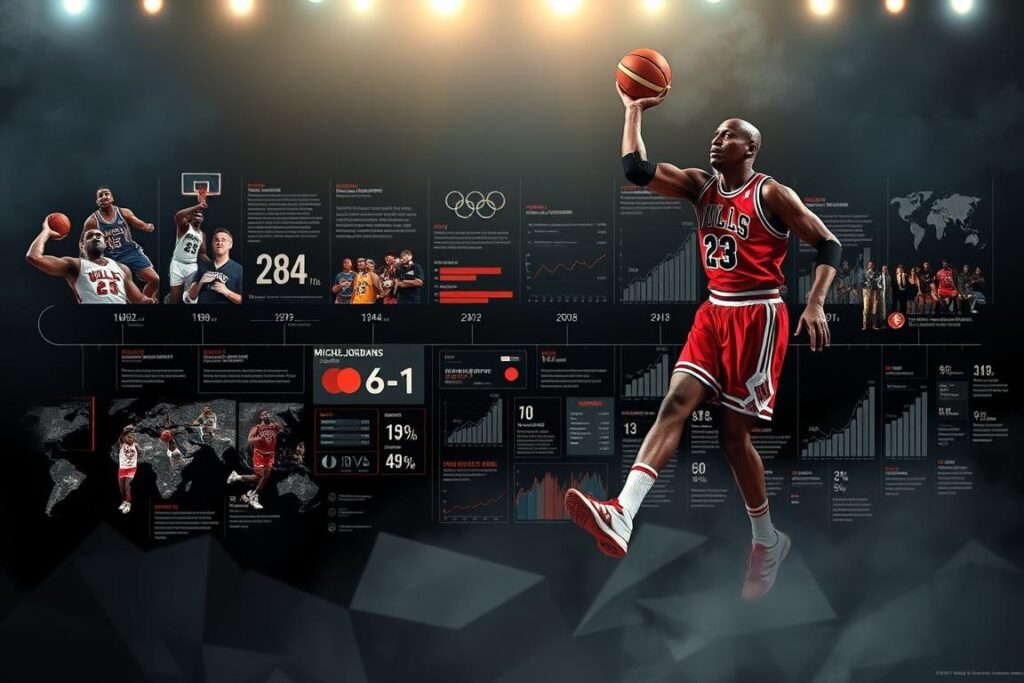
1982 to 1984: college fame to draft buzz
The 1982 moment created draft buzz that peaked in 1984 when he entered the NBA. That rookie year set the stage for early All-Star selections and the Air Jordan partnership.
Six championships and global brand rise
Across key Bulls seasons, six titles with the chicago bulls built a global following. High-profile games and iconic shots became marketing hooks that fueled apparel demand and storytelling.
2014 billionaire milestone and what came after
Reaching billionaire status in 2014 marked a shift from player to full-time mogul. In the years since, royalties, selective equity moves, and new ventures kept growth steady.
- Early fame: north carolina roots anchored the origin story.
- Peak seasons: championships created lasting pricing power.
- Post-2014: royalties and ownership moves sustained momentum over time.
The Chicago Bulls era: championships that built a global brand
Championship runs with the Chicago Bulls transformed clutch moments into lasting brand currency.
Across multiple seasons, he led the team to six NBA titles and earned six Finals MVPs. Those years also included five league MVP awards and historic scoring averages that defined a generation of basketball.
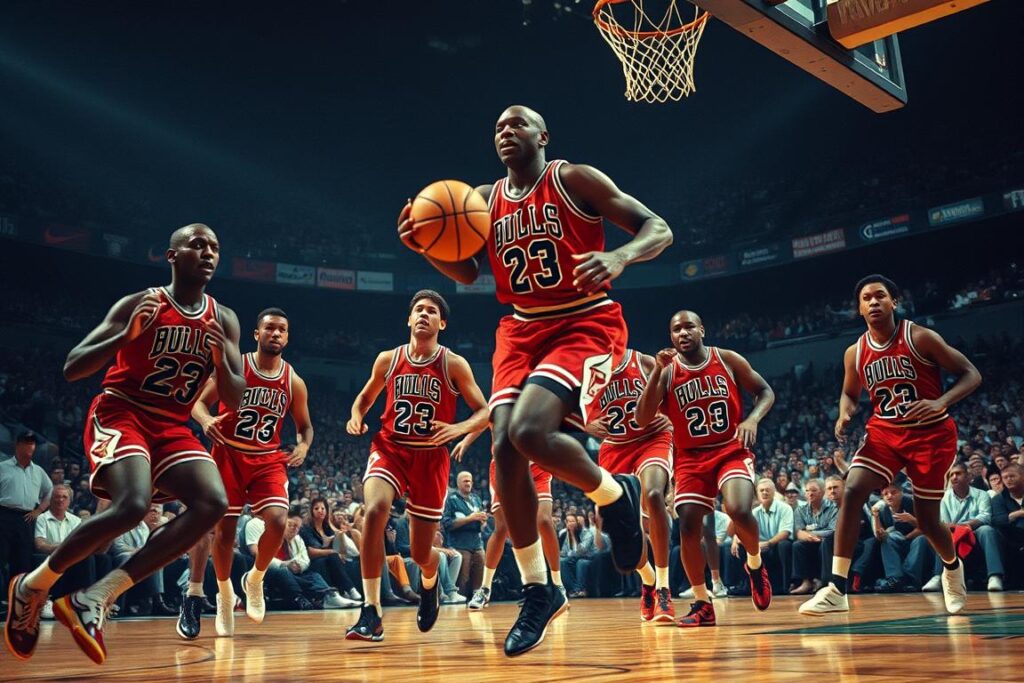
The two three-peats turned big games into worldwide events. Repeated Finals appearances made each playoff game a cultural moment and pushed merchandise and shoe demand to new heights.
- Dynasty impact: the chicago bulls dynasty cemented his status as the face of 1990s basketball.
- Signature moments: iconic shot highlights and clutch plays became visual shorthand for excellence.
- Team platform: coaching, teammates, and the system amplified his brand in every arena.
Success over those years increased media rights value, fueled global tours, and created a cycle of exposure and sales. That era set the stage for later business moves, equity bets, and long-term partnerships.
For a deeper profile on how the era ties to his overall fortune, see the full net worth breakdown.
Washington Wizards years: visibility, legacy, and brand longevity
The late-career comeback with the Washington Wizards reintroduced him to a younger generation of basketball fans. He played two seasons (2001–2003), and those years stretched his public profile beyond prior eras.
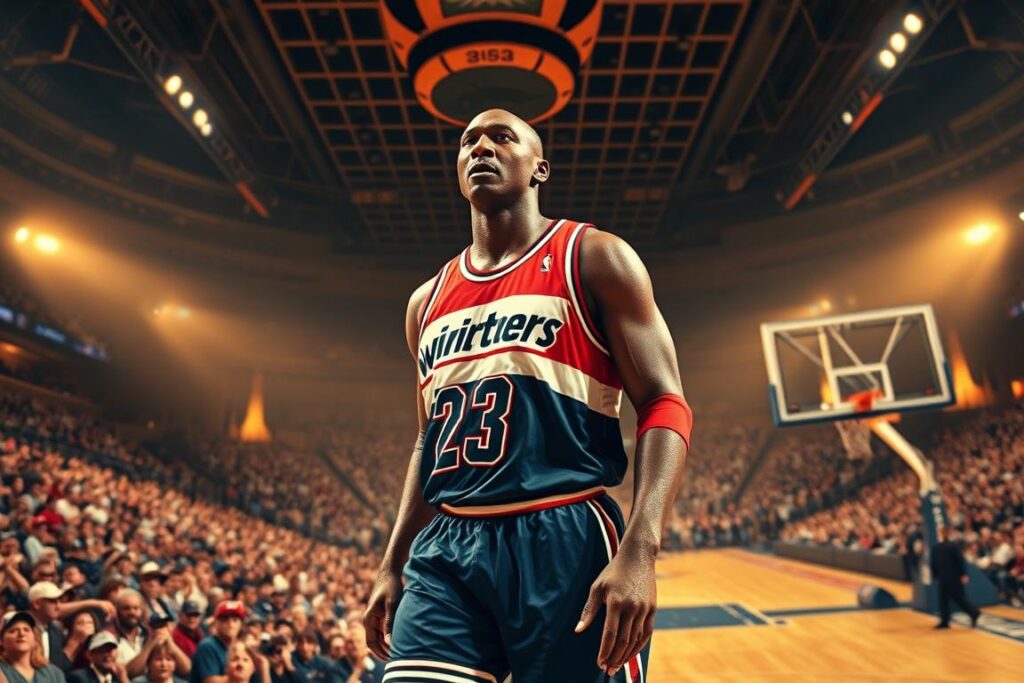
The return boosted jersey sales, media interest, and attendance. Select games showed he still had elite fundamentals and court IQ, giving broadcasters and sponsors fresh highlights to use.
As a player-executive figure he bridged operations and marketing. That role foreshadowed later ownership moves and expanded licensing across new markets.
- Expanded visibility: washington wizards stint added two more seasons on display.
- Commercial lift: renewed demand for merchandise and broadcast content.
- Legacy depth: memorable shot sequences and leadership moments broadened the narrative.
Overall, his time in Washington complemented the north carolina-to-Chicago arc. The chapter kept his brand top of mind and created fresh content brands still reference today.
Comparing MJ’s wealth to other NBA greats and sports billionaires
Comparing the fortunes of all-time greats shows how eras and business choices shape financial outcomes. This view helps explain why one icon became the first NBA player to hit billionaire status in 2014 while others follow different paths.
Context vs. active-era earnings and modern media deals
He built most wealth from royalties and equity, not from modern TV contracts. That model differs sharply from many active stars whose pay leans on big media rights and streaming deals.
- Royalties and equity: michael jordan’s model relied on brand payouts and ownership exits.
- Media-era pay: lebron james benefits from higher salaries, production deals, and social platforms.
- Era adjustments: comparing net and net worth across generations needs context for league economics and global reach.
- Team legacy: the chicago bulls era created a worldwide platform that magnified later returns.
- Paths to wealth: some players grow via salary and content; others do it through patient business moves and brand control.
In short, both approaches can produce massive fortunes. But as a billionaire, he stands in a small group whose influence spans sports, business, and the world beyond the court.
What keeps Michael Jordan’s net worth growing today
Retro release cycles and limited-run drops create predictable revenue spikes each year. That steady cadence turns nostalgia into measurable earnings without heavy new product risk.
Royalty durability, retro cycles, and limited drops
Air Jordans remain a durable revenue engine because retros and collaborations drive repeated buying waves.
Scarcity creates urgency, and storytelling around key moments from the game fuels demand across years. This keeps royalty payments resilient and often rising with each anniversary or special drop.
Smart timing on acquisitions and exits
He has shown discipline in capital moves. Selling the majority stake in the Hornets in 2023 converted paper gains into cash while he retained upside as a minority owner.
Ongoing endorsements and selective ventures stack on top of realized equity wins. The combination of careful brand stewardship and patient capital allocation explains why his earnings trend upward over time.
- Durable royalties: retro cycles and drops sustain income.
- Selective exposure: team and business moves protect premium positioning.
- Timing matters: smart exits lock in gains while keeping future upside.
For a closer look at financial milestones and how they align with product strategy, see the full net worth breakdown.
Myths vs. facts about Michael Jordan’s money
Public perception blends iconic game moments with simplified ideas about how earnings stack up. That creates common myths about his pay and business deals. A quick fact-check clears the confusion.
Highest-paid player myths during his playing years
Myth: he was always the top-paid NBA player. Fact: he held the league’s highest salary for only two seasons of his 15-year career.
That late-career pay spike matters, but it is one part of a much larger financial arc tied to branding and royalties.
Common misconceptions about Nike payouts and ownership
Myth: Nike paid huge sums from day one. Fact: the 1984 deal began at $500,000 per year plus royalties and scaled as the brand grew to billions in annual retail sales.
Myth: ownership guarantees instant windfalls. Fact: returns came from valuation growth, partial sales, and careful timing. It’s equity work, not magic.
- Salary vs. endorsements: salary helped, but endorsement deals and royalties drove most of his long-term worth.
- Not just sneakers: media, appearances, and business ventures also add durable value.
- Numbers vary: differing estimates often mix gross figures with taxes, fees, and minority stakes.
Clear facts show how a single iconic shot or set of games boosts brand value, but long-term wealth was built by contracts, equity, and steady royalty income. For a related comparison, see LeBron James’ net worth profile.
Cultural impact and philanthropy: intangible value, real influence
His cultural footprint reaches far beyond trophies, shaping global views of American sports and style. Fans around the world connect with the image he created on and off the court.
He helped elevate basketball internationally in the 1980s and 1990s, turning single game moments into shared cultural memories. Those moments linked a university north carolina origin story to global fandom.
Philanthropy and local initiatives reinforce that legacy. Team-focused charitable work and youth programs show a commitment to the next generation.
- Brand and culture: signature campaigns and iconic imagery made sportswear and style part of daily life.
- Roots matter: ties to north carolina and university north carolina keep community values central.
- Public service: awards like the Presidential Medal of Freedom highlight civic impact beyond the game.
These non‑financial assets add loyalty, depth, and long-term brand equity. They affect how fans and markets value the legacy and, indirectly, overall worth.
What this means for fans and the business of sports going forward
, He shows that brand control, royalty income, and selective equity deals form a lasting postgame model for athletes.
For fans, michael jordan’s story proves elite play can turn into a business platform that still pays dividends today. It ties big games and iconic moments to ongoing value.
For the sports industry, the blueprint matters: build brand equity, secure royalties, sign the right partners, and time exits from an nba team. Selling a majority stake in the charlotte hornets while keeping a minority position shows that strategy.
The chicago bulls legacy keeps selling. As media, commerce, and games converge, athletes and investors will copy this mix of royalties, equity, and fan connection to grow long-term net worth.
FAQ
How much is Michael Jordan worth today?
Estimates for his wealth in 2025 vary by source, but most place his net fortune around
FAQ
How much is Michael Jordan worth today?
Estimates for his wealth in 2025 vary by source, but most place his net fortune around $1.5 billion or higher. Figures differ because they mix public valuations (like the NBA team stake sale) with private assets such as royalty streams and selective equity positions.
Why do estimates of his fortune vary so much?
Variance comes from differing methods: some outlets count unrealized gains on private companies and illiquid assets, while others use conservative public-market valuations. Royalties from the sneaker brand and equity in businesses can be hard to value precisely, so totals shift with new deals and team sales.
Where does he rank among the world’s richest celebrities?
He consistently ranks near the top among athlete-entrepreneurs and within the upper tier of celebrity wealth globally, often listed alongside business-focused entertainers and sports owners rather than active players.
What are the main drivers behind his billionaire status?
Three core drivers: the enduring sneaker brand tied to his NBA legacy, timely ownership moves (notably the Hornets stake), and long-term licensing and royalty deals that compound annually.
How much did he earn from NBA salaries during his career?
Career earnings from NBA paychecks were significant but represent a minority of lifetime wealth. Early landmark seasons saw $30M-plus cumulative pay over peak years, but endorsement and ownership income far outpaced on-court salary.
What was the original Nike deal and why does it matter?
The 1984 agreement guaranteed a modest base (reported near $500,000 yearly) plus royalties. That structure created a perpetual revenue stream as the sneaker line scaled into a global brand, making the deal one of sports business’s smartest long-term contracts.
How did the sneaker brand grow into such a powerhouse?
The brand combined on-court excellence, iconic design, and cultural moments. Strategic retro releases, limited drops, and collaborations with fashion and music amplified demand across generations.
How large are annual payouts from the sneaker and licensing business?
Annual payouts fluctuate with retro cycles and new product drops, but they remain a primary, consistent income source—often tens of millions per year—even decades after retirement.
Beyond Nike, which endorsement deals mattered most?
High-profile partnerships with companies like Gatorade, McDonald’s, and Coca-Cola contributed meaningfully, boosting global recognition and providing lucrative long-term deals that complemented the sneaker business.
How did the Hornets ownership affect his finances?
Buying a stake in the Charlotte franchise in 2010 and increasing it over time tied a portion of his wealth to franchise valuations. A partial sale of majority interest in 2023 unlocked substantial value and helped solidify billionaire status.
Did selling the majority stake in the team reduce or increase his overall value?
The strategic sale converted a large, illiquid holding into cash and liquid equity, often increasing publicly reported net value and giving flexibility for other investments while retaining minority upside.
What other businesses contribute to his portfolio?
Ventures include 23XI Racing in motorsports, ownership interests in restaurants and dealerships, and selective private equity positions that diversify income beyond sports and apparel.
Which career moments most influenced his wealth trajectory?
Early visibility from the 1982 UNC game-winning shot, the six Chicago championships that made the brand global, and the 2014 billionaire recognition were pivotal business inflection points.
How did the Chicago Bulls era create long-term brand value?
Championship success amplified global fame, turning on-court highlights into cultural currency that translated into durable demand for apparel, shoes, and media opportunities.
Did the Washington Wizards years help or hurt his profile?
The Wizards stint kept him visible in the NBA landscape and maintained brand relevance, even if it didn’t add as much to earnings as earlier peak years; overall, it supported long-term recognition.
How does his wealth compare to other sports billionaires and top NBA earners?
He ranks alongside a handful of sports figures who converted athletic fame into large-scale business wealth. Compared with active-era top earners, his combination of royalties and ownership places him in a unique league.
What keeps his wealth growing today?
Durable royalties, repeat retro cycles, limited-edition drops, and smart timing on acquisitions and exits sustain growth. Continued cultural relevance also fuels recurring demand for legacy products.
What are common myths about his income and the sneaker payouts?
A frequent myth is that playing salaries made him the highest-paid player in his era; in reality, endorsements and royalties surpassed on-court pay. Another misconception is that Nike always paid massive flat fees—royalties and equity played the bigger long-term role.
How does his cultural impact relate to philanthropy and influence?
Cultural influence creates intangible value—brand loyalty and global recognition—which supports philanthropy and business initiatives. His charitable work and public profile reinforce a legacy that extends beyond pure financial metrics.
What should fans and the sports business world take away from his financial story?
The key lessons are the power of brand-building, the value of long-term licensing, and the advantage of converting fame into strategic ownership. Those elements show how athletes can create multigenerational wealth beyond playing careers.
.5 billion or higher. Figures differ because they mix public valuations (like the NBA team stake sale) with private assets such as royalty streams and selective equity positions.
Why do estimates of his fortune vary so much?
Variance comes from differing methods: some outlets count unrealized gains on private companies and illiquid assets, while others use conservative public-market valuations. Royalties from the sneaker brand and equity in businesses can be hard to value precisely, so totals shift with new deals and team sales.
Where does he rank among the world’s richest celebrities?
He consistently ranks near the top among athlete-entrepreneurs and within the upper tier of celebrity wealth globally, often listed alongside business-focused entertainers and sports owners rather than active players.
What are the main drivers behind his billionaire status?
Three core drivers: the enduring sneaker brand tied to his NBA legacy, timely ownership moves (notably the Hornets stake), and long-term licensing and royalty deals that compound annually.
How much did he earn from NBA salaries during his career?
Career earnings from NBA paychecks were significant but represent a minority of lifetime wealth. Early landmark seasons saw M-plus cumulative pay over peak years, but endorsement and ownership income far outpaced on-court salary.
What was the original Nike deal and why does it matter?
The 1984 agreement guaranteed a modest base (reported near 0,000 yearly) plus royalties. That structure created a perpetual revenue stream as the sneaker line scaled into a global brand, making the deal one of sports business’s smartest long-term contracts.
How did the sneaker brand grow into such a powerhouse?
The brand combined on-court excellence, iconic design, and cultural moments. Strategic retro releases, limited drops, and collaborations with fashion and music amplified demand across generations.
How large are annual payouts from the sneaker and licensing business?
Annual payouts fluctuate with retro cycles and new product drops, but they remain a primary, consistent income source—often tens of millions per year—even decades after retirement.
Beyond Nike, which endorsement deals mattered most?
High-profile partnerships with companies like Gatorade, McDonald’s, and Coca-Cola contributed meaningfully, boosting global recognition and providing lucrative long-term deals that complemented the sneaker business.
How did the Hornets ownership affect his finances?
Buying a stake in the Charlotte franchise in 2010 and increasing it over time tied a portion of his wealth to franchise valuations. A partial sale of majority interest in 2023 unlocked substantial value and helped solidify billionaire status.
Did selling the majority stake in the team reduce or increase his overall value?
The strategic sale converted a large, illiquid holding into cash and liquid equity, often increasing publicly reported net value and giving flexibility for other investments while retaining minority upside.
What other businesses contribute to his portfolio?
Ventures include 23XI Racing in motorsports, ownership interests in restaurants and dealerships, and selective private equity positions that diversify income beyond sports and apparel.
Which career moments most influenced his wealth trajectory?
Early visibility from the 1982 UNC game-winning shot, the six Chicago championships that made the brand global, and the 2014 billionaire recognition were pivotal business inflection points.
How did the Chicago Bulls era create long-term brand value?
Championship success amplified global fame, turning on-court highlights into cultural currency that translated into durable demand for apparel, shoes, and media opportunities.
Did the Washington Wizards years help or hurt his profile?
The Wizards stint kept him visible in the NBA landscape and maintained brand relevance, even if it didn’t add as much to earnings as earlier peak years; overall, it supported long-term recognition.
How does his wealth compare to other sports billionaires and top NBA earners?
He ranks alongside a handful of sports figures who converted athletic fame into large-scale business wealth. Compared with active-era top earners, his combination of royalties and ownership places him in a unique league.
What keeps his wealth growing today?
Durable royalties, repeat retro cycles, limited-edition drops, and smart timing on acquisitions and exits sustain growth. Continued cultural relevance also fuels recurring demand for legacy products.
What are common myths about his income and the sneaker payouts?
A frequent myth is that playing salaries made him the highest-paid player in his era; in reality, endorsements and royalties surpassed on-court pay. Another misconception is that Nike always paid massive flat fees—royalties and equity played the bigger long-term role.
How does his cultural impact relate to philanthropy and influence?
Cultural influence creates intangible value—brand loyalty and global recognition—which supports philanthropy and business initiatives. His charitable work and public profile reinforce a legacy that extends beyond pure financial metrics.
What should fans and the sports business world take away from his financial story?
The key lessons are the power of brand-building, the value of long-term licensing, and the advantage of converting fame into strategic ownership. Those elements show how athletes can create multigenerational wealth beyond playing careers.
Basketball StarsCelebrity net worthMichael Jordan InvestmentsNBA LegendsPro Athletes WealthSports Icons
Hey there! I'm Jillian Hunt. I'm all about diving into the financial side of celebrities' lives and sharing those juicy details with you. I love turning complicated money stuff into fun and easy reads. Whether it's checking out how a newbie is making waves or seeing what the big names are doing with their cash, I'm here to give you the scoop in a way that's both interesting and easy to understand.