



Net Worth by Age: Average Wealth Benchmarks in the US
 Jillian Hunt
June 7, 2025 8:05 pm
.
11 min read
Jillian Hunt
June 7, 2025 8:05 pm
.
11 min read
When Sarah, a 34-year-old teacher from Ohio, sat down to review her finances last month, she realized something surprising. Her retirement account had grown steadily, but her student loans still weighed heavily. This balance between what she owned and owed—her financial health snapshot—revealed where she stood compared to others her age.
Understanding this balance matters because it shapes future goals. Assets like savings, homes, or investments minus debts create a clear picture of progress. Recent data from the Federal Reserve shows the median value for U.S. households reached $192,900 in 2022. However, this number shifts dramatically across generations.
Younger adults often focus on paying off loans, while those in their 50s tend to build equity faster. Over time, consistent saving and smarter investments help people grow their resources. Tracking these milestones offers motivation and reveals gaps to address.
This article explores how financial standings evolve through life stages. It breaks down key statistics, highlights common patterns, and provides actionable insights. Whether starting a career or nearing retirement, everyone can benefit from knowing where they stand—and where they could go.
Understanding Net Worth: Definition, Components, and Calculation
Your financial health is like a scale—assets on one side, debts on the other. The balance between these two determines your overall stability. This measure, often called a financial snapshot, reveals whether you’re moving forward or need adjustments.
What Is This Financial Measure and Why It Matters
Think of assets as everything you own: cash, retirement accounts, homes, or stocks. Liabilities include credit card balances, mortgages, and personal loans. Subtract what you owe from what you own—this simple math paints a clear picture of progress.
Tracking this balance helps identify gaps. For example, paying off a $10,000 car loan increases your financial standing by eliminating debt. Data shows households prioritizing this calculation make smarter decisions over time.
Breaking Down the Numbers
Start by listing all assets and liabilities. Savings accounts, investments, and property go on the plus side. Student loans, medical bills, and credit cards belong on the minus side. Regular updates help spot trends, like growing retirement funds or shrinking debt.
Understanding where you stand compared to others in your life stage can motivate action. For tailored advice, explore our comprehensive guide on interpreting these metrics responsibly.
Average and Median Net Worth by Age: Data Insights
Imagine two neighbors: one with a mansion, the other in an apartment. Their average wealth might suggest prosperity, but the median reveals a different truth. This contrast explains why national surveys often share both figures.

Federal Reserve Survey Findings
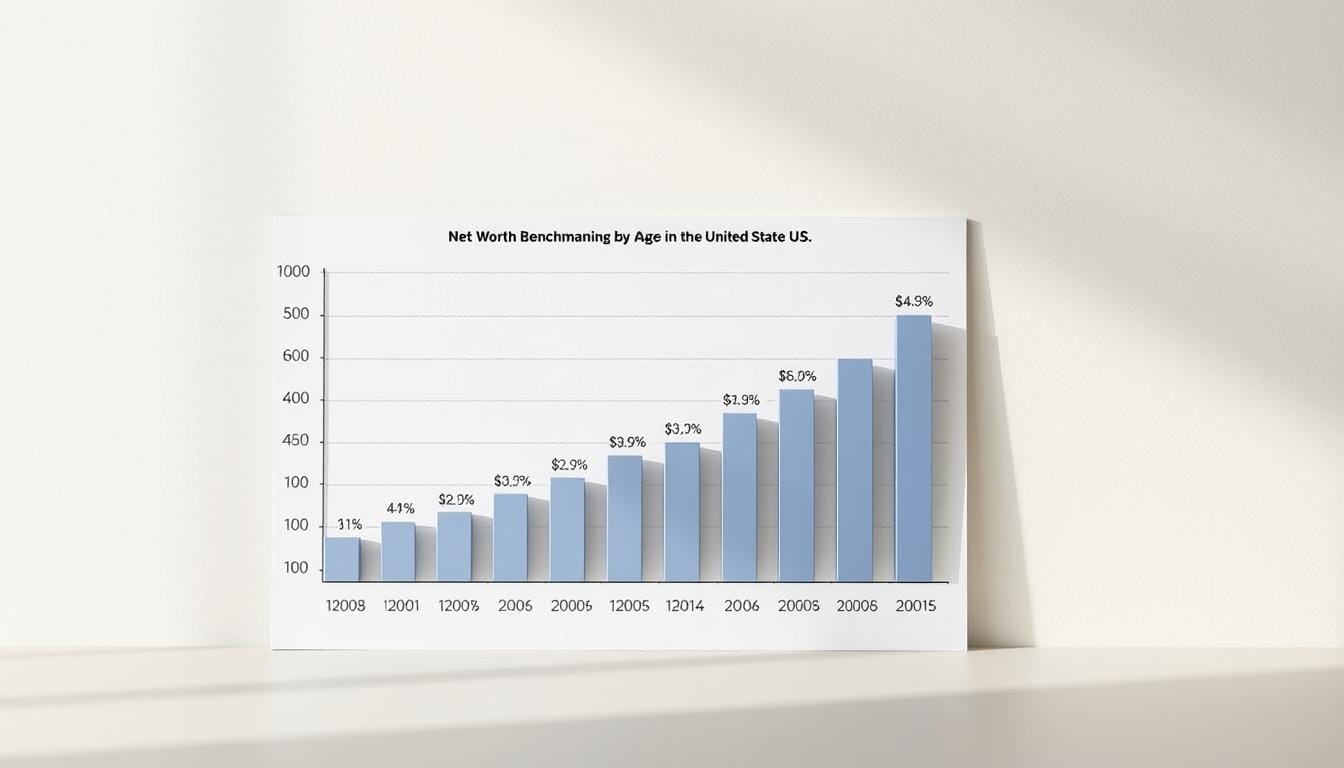
The 2022 Survey of Consumer Finances shows stark differences across generations. Households under 35 have an average financial value of $183,500—but the median sits at just $39,000. This gap shrinks as people grow older, with those aged 55-64 reaching a median of $213,150.
Why Medians Tell the Real Story
High earners dramatically lift averages, while medians show what’s typical for most. For example, the top 10% of households hold 69% of total U.S. wealth. This makes median values better benchmarks for everyday comparisons.
Recent trends reveal steady growth in home equity and retirement accounts. However, younger adults still face challenges like student debt. Tools like national financial benchmarks help contextualize personal progress against broader patterns.
Understanding these metrics empowers smarter decisions. Whether saving for retirement or paying off loans, knowing where you stand relative to peers provides clarity and motivation.
Comparing Your Net Worth by Age to National Benchmarks
Every financial decision gains clarity when viewed through the lens of national averages. These benchmarks act like mile markers on a highway—they show whether you’re keeping pace or need to adjust your speed.

Turning Data Into Actionable Plans
The Survey of Consumer Finances reveals patterns that matter. For example, households prioritizing retirement savings early often outpace peers by their 50s. Median values help set realistic targets, while averages highlight what’s possible with strategic moves.
If your numbers trail these markers, focus on progress—not perfection. Paying off high-interest debt first frees up money for investments. Boosting retirement contributions by even 1% annually compounds significantly over decades.
Consider these steps supported by financial surveys:
- Review debt-to-income ratios quarterly
- Automate savings for hands-off growth
- Diversify assets beyond primary residences
Remember, benchmarks aren’t finish lines—they’re checkpoints. A 35-year-old with $50,000 saved might feel behind, but consistent investment choices can close gaps faster than expected. Tools like budget apps or fiduciary advice turn raw data into personalized roadmaps.
Retirement Accounts and Investment Growth
Consider Jenna, a 30-year-old graphic designer who recently increased her 401(k) contributions. Her choice reflects a pattern seen in Federal Reserve reports—retirement savings become wealth accelerators as careers progress. These accounts, combined with property ownership, form critical pillars of long-term financial stability.

401(k) Trends Across Generations
Fidelity data shows workers in their 30s average $42,400 in retirement savings, while those in their 50s hold $243,300. Employer matches and automatic contributions help these funds grow steadily. Homes also play a role—many Americans build equity faster after 40, adding another layer to their financial foundation.
Also Read:
Power of Compounding Over Time
Starting early transforms small deposits into significant sums. A 25-year-old investing $300 monthly at 7% interest would see $1.1 million by 65. Waiting until 45 to begin cuts the total by 76%. This math explains why consistent contributions matter more than occasional large deposits.
Key strategies from recent surveys include:
- Maximizing employer retirement plan matches
- Refinancing mortgages to boost home equity
- Reviewing asset allocation every 3-5 years
For those seeking guidance, financial planning strategies tailored to different life stages can optimize these growth opportunities. Whether through retirement accounts or property value, deliberate choices today shape tomorrow’s possibilities.
Strategies to Build and Enhance Your Financial Health
When Mark opened his credit card statement last week, the numbers told a story he couldn’t ignore. Like many Americans, balancing daily expenses with long-term goals felt overwhelming. Strengthening financial stability requires two parallel efforts: trimming unnecessary costs and strategically growing resources.

Practical Tips for Reducing Debt and Cutting Expenses
Start by tracking every dollar spent for 30 days. This reveals patterns, like unused subscriptions or frequent takeout meals. Popular budgeting methods include:
- The 50/30/20 rule (needs/wants/savings)
- Automating bill payments to avoid late fees
- Negotiating lower rates on insurance or loans
Building an emergency fund shields against unexpected costs. Aim for $1,000 initially, then expand to cover 3-6 months of living expenses. Small changes—like brewing coffee at home—add up over time, freeing cash for debt repayment.
Smart Investment Practices for Long-Term Growth
Consistency beats timing. Regular contributions to retirement accounts, even modest ones, harness compounding. A diversified portfolio mixing stocks, bonds, and real estate balances risk and reward.
Focusing on median growth benchmarks helps set realistic targets, while average figures inspire ambition. For example, investing $500 monthly with 7% returns grows to $1.2 million in 35 years. Reinvesting dividends and avoiding emotional stock trades further boosts results.
Remember, financial progress isn’t linear. Celebrate milestones like paying off a loan or hitting a savings goal—they’re proof your strategies work.
Life Stage Financial Advice: From Early Career to Retirement
Financial priorities shift like seasons—what works at 25 rarely fits at 55. Studies by Empower and the Federal Reserve confirm this evolution, showing how strategies transition from aggressive saving to careful withdrawals. Recognizing these patterns helps align choices with life’s changing demands.

Building Wealth in Your 20s and 30s
Start early, even with small amounts. A 25-year-old saving $300 monthly could amass over $1 million by retirement, thanks to compounding. Prioritize:
- Emergency funds covering 3-6 months of expenses
- Retirement account contributions, especially employer-matched 401(k)s
- Debt reduction for student loans or credit cards
Federal Reserve data shows adults under 35 with retirement accounts have 3x higher median net value than peers without. Automating savings ensures consistency during busy career-building years.
Optimizing Savings in Your 40s and 50s
Peak earning decades offer acceleration opportunities. Boost retirement contributions to 15-20% of income and diversify investments. Consider:
- Maximizing catch-up contributions in IRAs or 401(k)s after 50
- Refinancing mortgages to lower rates and build equity faster
- Reallocating portfolios to balance growth and stability
Empower research highlights households in this age group increase their average net assets by 58% when focusing on tax-advantaged accounts and side investments.
Also Read:
Planning for Retirement in Later Years
Shift from accumulation to preservation. Review withdrawal rates to ensure savings last—many advisors suggest 4% annually. Key steps include:
- Converting traditional IRAs to Roth accounts for tax flexibility
- Exploring healthcare cost strategies like HSAs
- Adjusting risk exposure in investment portfolios
As Ms. Rachel’s financial journey illustrates, adapting strategies to life phases creates lasting security. Whether starting out or winding down, intentional planning turns benchmarks into achievable goals.
The Role of Home Equity and Real Estate in Overall Wealth
For many families, their home isn’t just a place to live—it’s a financial engine. Over time, mortgage payments and property value increases transform four walls into a powerful asset. This growth often forms the backbone of household wealth, especially as other savings vehicles mature.

Understanding Home Equity as an Asset
Home equity grows in two ways: paying down loans and market appreciation. A $300,000 house with a $200,000 mortgage holds $100,000 in equity. Federal Reserve data shows primary residences account for 28% of household assets nationwide.
Median home values rose 34% since 2019, boosting equity faster than many expect. However, high mortgage debt can offset these gains. Strategic refinancing or extra payments help balance growth with manageable obligations.
Real Estate Investment for Long-Term Stability
Rental properties diversify portfolios beyond stocks or bonds. A duplex generating $1,500 monthly income adds cash flow while building equity. Over decades, this dual benefit often outpaces traditional savings accounts.
Market risks exist—like maintenance costs or vacancies—but location research mitigates them. Zillow reports 15 U.S. metros saw rents climb over 8% last year, highlighting opportunities for savvy investors.
Consulting financial advisors ensures real estate aligns with broader goals. They help navigate tax implications, loan structures, and exit strategies. Blending property investments with retirement plans creates resilient, multi-layered wealth.
Final Reflections on Your Financial Journey
Financial journeys are as unique as fingerprints—shaped by household income, spending choices, and how assets grow over decades. While national data offers helpful benchmarks, true progress comes from personalized strategies that align with individual goals.
Regular reviews of accounts and debts create clarity. Balancing loans with savings builds stability, while smart tax moves protect gains. For example, households prioritizing automated investments often see compounding work in their favor, even with modest starting points.
Markets shift, and life surprises—but consistent habits weather storms. Whether adjusting retirement contributions or exploring planning services, small steps today shape tomorrow’s possibilities. Celebrate milestones, but stay curious about new ways to optimize.
Remember: financial health isn’t a destination. It’s a continuous process of learning, adapting, and growing. Keep exploring trends, refine strategies, and let data guide decisions while leaving room for life’s unexpected joys.
FAQ
What’s the difference between average and median wealth benchmarks?
The average sums all values and divides by the number of households, which can skew higher due to outliers. The median represents the middle value, offering a clearer picture of typical household wealth. Federal Reserve data often highlights both to show economic disparities.
How does home equity factor into financial health?
Home equity acts as a key asset, growing as mortgage debt decreases and property values rise. It often represents a significant portion of household wealth, especially for those in their 40s–60s. Real estate investments can further boost long-term stability.
Why prioritize retirement accounts like a 401(k)?
Retirement accounts benefit from compounding growth, where earnings generate more earnings over time. Tax advantages and employer matches in plans like 401(k)s accelerate savings, making them critical for building wealth across decades.
What strategies help reduce debt efficiently?
Focus on high-interest debt first, like credit cards, while maintaining minimum payments on other loans. Budget adjustments, such as cutting discretionary spending or refinancing loans, free up cash flow. Automated payments also prevent missed deadlines.
How should financial goals evolve with age?
Younger individuals might prioritize emergency funds and starting investments. Mid-career adults often balance mortgage payments, education costs, and retirement savings. Those nearing retirement shift toward preserving capital and generating reliable income streams.
Are real estate investments always a safe choice?
While property can appreciate and generate rental income, markets fluctuate. Diversifying across assets like stocks, bonds, or REITs reduces risk. Consulting a financial advisor helps align real estate decisions with broader goals.
Age-based net worthAverage wealth by ageEconomic benchmarksFinancial milestonesPersonal FinancesWealth AccumulationWealth Building Strategies
Hey there! I'm Jillian Hunt. I'm all about diving into the financial side of celebrities' lives and sharing those juicy details with you. I love turning complicated money stuff into fun and easy reads. Whether it's checking out how a newbie is making waves or seeing what the big names are doing with their cash, I'm here to give you the scoop in a way that's both interesting and easy to understand.